
Intellectual Property
Hot selling product recommendations
View More




















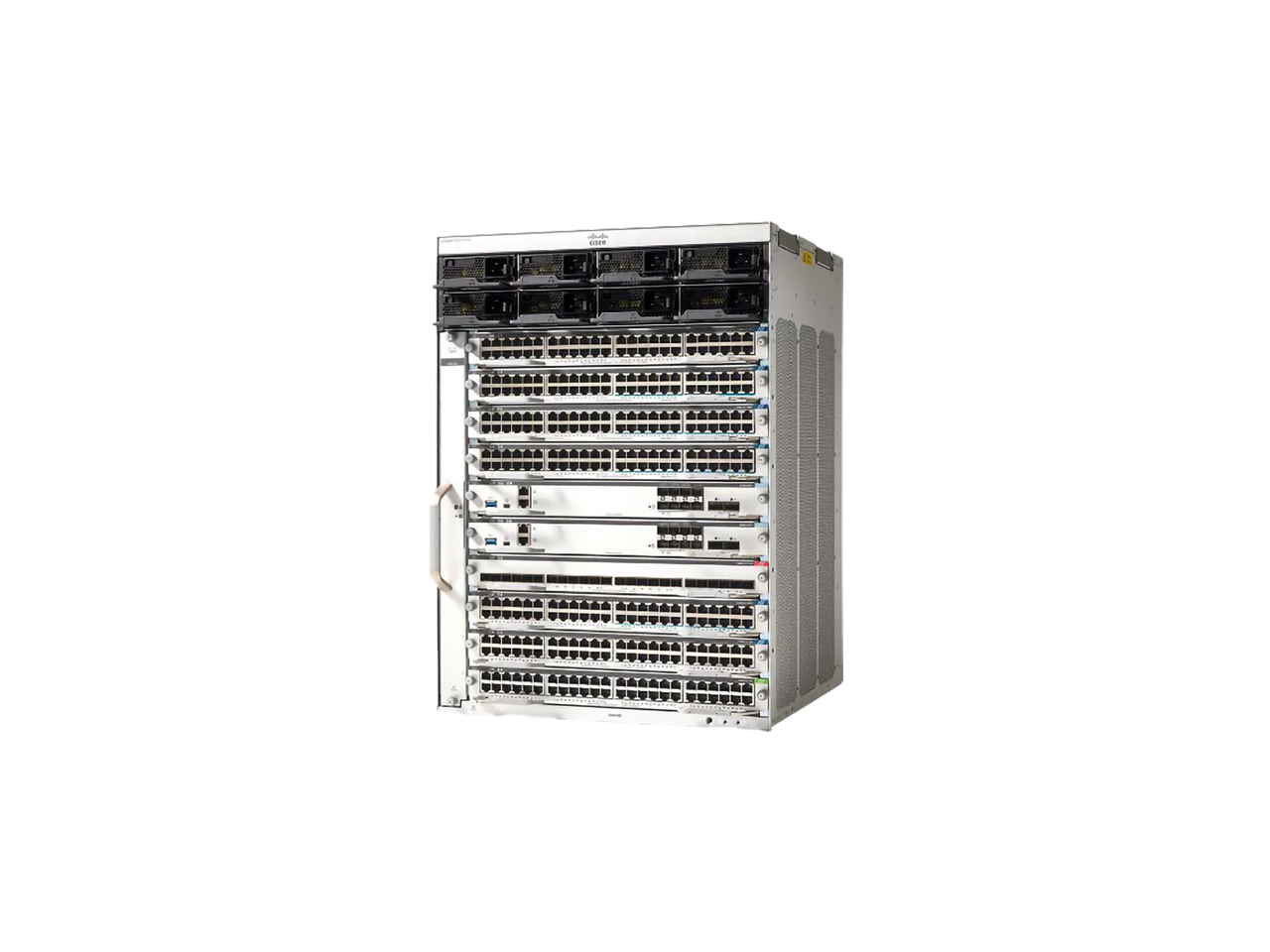
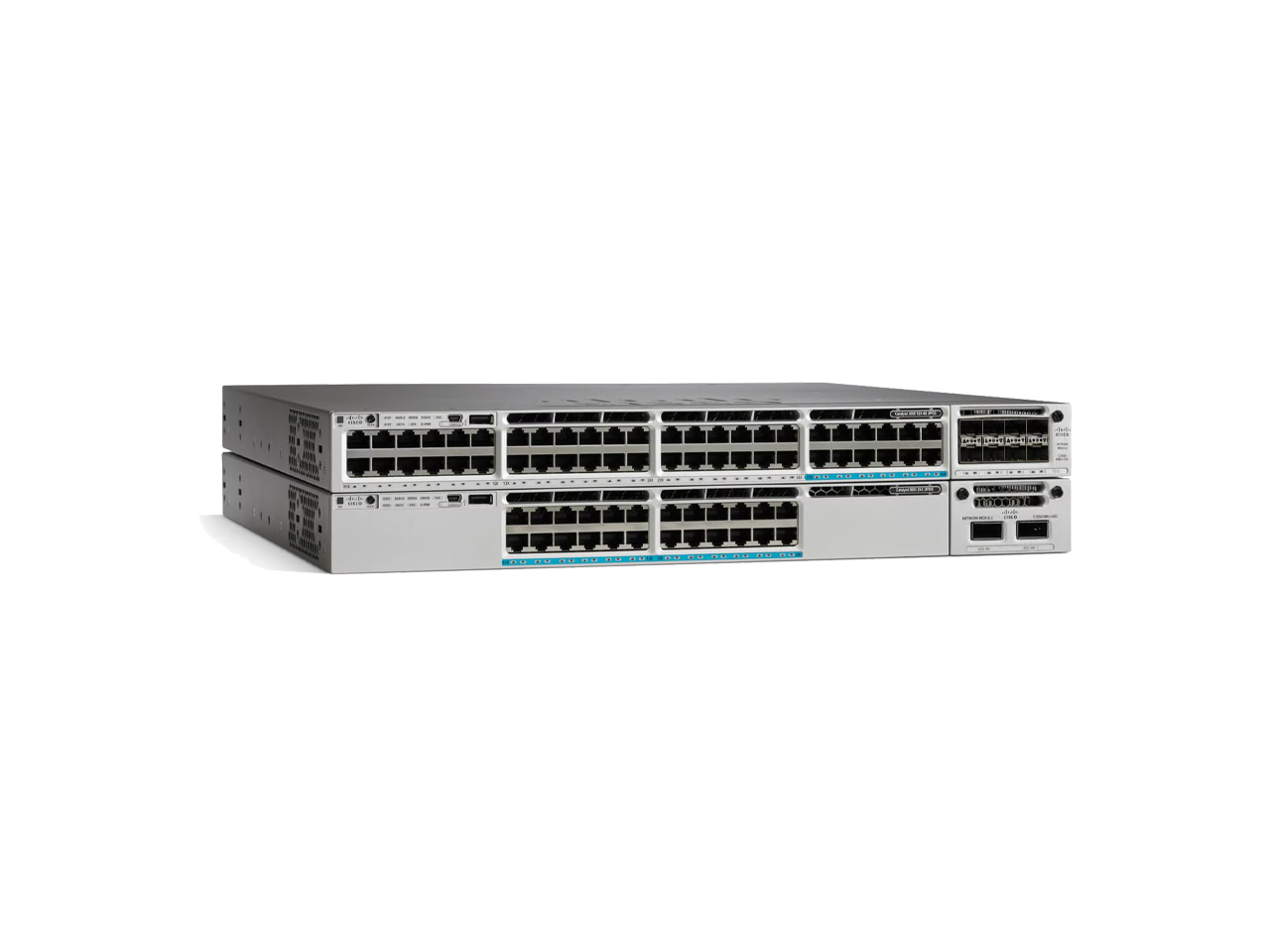
The Cisco Catalyst 6800 Series is a modular campus core switch family. It is the class of switch that sits at the centre of a large building or campus network, aggregating dozens of access switches and providing the routing between them. As with any modular platform, what you buy is a chassis plus the cards that go into it — the chassis on its own is a metal shell with slots, power bays and a backplane.
Two chassis families appear on this page, and they are built on different principles:
The part numbers on this page use a small set of conventions worth learning before comparing prices:
This is the single most common mistake when pricing a modular core. The bare C6807-XL chassis is the least expensive large item in this catalogue, and correctly so: it contains slots and nothing else. To make it carry traffic you need, at minimum:
The -BUN bundles exist precisely to reduce this assembly problem — a C6807-XL-S2T-BUN arrives with the supervisor, power and fan tray included, so compare a bundle against a bare chassis plus its separately purchased parts rather than against the chassis line alone.
Line cards come in copper and fibre versions with equivalent port counts and very different prices, because the physical layer is different hardware:
Where the core connects to another building or to a service provider, the 8-port 10 Gigabit and 8-port 40 Gigabit cards are the uplink cards. The 40G card is priced far above the 10G card for the same port count — a reminder to confirm the uplink speed requirement with the network design before ordering, rather than buying 40G "for headroom".
The -XL line cards carry a larger forwarding engine than the plain cards of the same port count, and the price step is significant — a 48-port SFP line card in its XL form costs several times the standard card. The XL cards exist to be driven by a supervisor and a fabric that can keep up with them. Buy XL cards only where the chassis, the supervisor and the traffic actually require that forwarding scale; the card will still slot in otherwise, but the premium buys nothing.
The WS-F6K-DFC4-EXL and its standard counterpart are Distributed Forwarding Cards that attach to a line card to give it local forwarding capacity. They are not standalone line cards and cannot be used without one. If your design calls for distributed forwarding, the DFC is part of the line-card cost, not an alternative to it.
The parts prefixed C1- on this page — including several chassis and one bundled system — are Cisco ONE SKUs. Cisco ONE is a software subscription entitlement rather than a perpetual licence. The hardware is the same; what changes is how the purchase is accounted for, renewed and capitalised. If your procurement rules require a perpetual licence, say so before ordering and we will quote the equivalent conventional part number.
| Model | Description | Price |
|---|---|---|
| C6807-XL | 7-slot modular chassis — chassis only | US$9,133.00 |
| C6807-XL-S2T-BUN | Chassis bundle — Sup2T engine, 2 power supplies, fan tray | US$12,648.00 |
| C6807-XL-S6T-BUN | Chassis bundle with Supervisor 6T engine | US$37,846.00 |
| C1-C6807XL-S2T-BUN | As above, supplied as a Cisco ONE SKU | US$40,068.00 |
Compare these carefully. The bundle carries a supervisor engine, two power supplies and the fan tray; the bare chassis carries none of them. Buying the bundle instead of the chassis is usually cheaper than buying the chassis and its parts separately — but only if the supervisor in the bundle is the one your design requires. The Sup2T and Sup6T bundles are not the same switch.
| Model | Description | Price |
|---|---|---|
| C6880-X-16P10G | 5RU chassis, Super 2TXL engine, 16 x 10G line card | US$22,658.00 |
| C6880-X-LE-16P10G | 5RU chassis, Super 2T engine, 16 x SFP+ 1G/10G line card | US$17,560.00 |
| C6880-X-LE | 5RU chassis, Super 2T engine — no power or fan included | US$32,855.00 |
| C6880-X | 5RU chassis, Super 2TXL engine — no power or fan included | US$44,450.00 |
| C1-C6880-X-LE | As above, supplied as a Cisco ONE SKU | US$21,413.00 |
Note the two lines that say no power or fan: those chassis arrive as bare frames. The models with a line card already fitted (the two 16P10G entries) are the ones to compare against a bare chassis plus a separate card. Also note the engine tier: Super 2T and Super 2TXL are different supervisors, and the XL variant is the larger one — which is why C6880-X is priced above C6880-X-LE.
| Model | Ports / Media | Price |
|---|---|---|
| C6800-48P-TX | 48 x copper Gigabit, integrated DFC4 | US$6,738.00 |
| C6800-48P-SFP | 48 x SFP+ 1G/10G, dual DFC4 | US$12,056.00 |
| C6800-48P-TX-XL | 48 x copper Gigabit, DFC4-XL forwarding engine | US$24,158.00 |
| C6800-48P-SFP-XL | 48 x SFP+ 1G/10G, DFC4-XL forwarding engine | US$33,821.00 |
| C6800-8P10G-XL | 8 x 10 Gigabit Ethernet, integrated DFC4-XL | US$5,244.71 |
| C6800-8P40G-XL | 8 x 40 Gigabit Ethernet, integrated DFC4-XL | US$42,673.93 |
| C6800IA-48TD | 48-port access card | US$4,958.00 |
Read the two 48-port fibre lines side by side. The plain SFP+ card and the XL card present the same ports and the same medium, but the XL card is nearly three times the price because of its forwarding engine. Whether that premium is justified depends entirely on the traffic the card will carry and on the supervisor driving the chassis — not on the port count.
| Model | Description | Price |
|---|---|---|
| C6800-SUP6T | Supervisor engine — 8 x 10GE, 2 x 40GE, 440 Gbps per slot | US$11,153.00 |
| WS-F6K-DFC4-EXL | Distributed forwarding card, enhanced version | US$5,483.31 |
| WS-F6K-DFC4-A | Distributed forwarding card, standard version | Ask for price |
The supervisor is the card that decides how much the rest of the chassis can do. A 6807-XL chassis needs at least one C6800-SUP6T. A redundant core design needs two — and note that the bundle chassis listed earlier each ship with a specific supervisor generation, so if your design calls for SUP6T, make sure the bundle you order is the one that contains it.
These are the same chassis platforms supplied under Cisco's subscription entitlement model. Presented together here so the entitlement difference can be priced directly rather than discovered at quotation.
| Model | Description | Price |
|---|---|---|
| C1-C6816-X-LE | Cisco ONE chassis, standard tables | US$2,603.00 |
| C1-C6880-X-LE | Cisco ONE 6880-X chassis, Super 2T engine | US$21,413.00 |
| C1-C6824-X-LE-40G | Cisco ONE chassis with 40 Gigabit capability | US$22,787.00 |
| C1-C6832-X-LE | Cisco ONE chassis, high slot count | US$28,582.00 |
| C1-C6840-X-LE-40G | Cisco ONE chassis, 40 Gigabit capability, largest configuration | US$80,391.00 |
Prices are our current selling prices in US dollars, excluding shipping. Click a model number for the full specification table and availability.
No. The bare C6807-XL is the chassis only and needs a supervisor engine, line cards, power supplies and a fan tray before it will forward traffic. If you want the supervisor and power included, order one of the bundle (-BUN) part numbers and check which supervisor generation that particular bundle carries.
The C6807-XL is a seven-slot chassis that expands by adding cards, with the supervisor supplied as a separate card. The C6880-X is a fixed five-rack-unit chassis with its supervisor integrated. The 6807-XL is the expandable choice for a growing core; the 6880-X puts core-grade forwarding into less rack space.
It denotes the enhanced line card variant, carrying a larger forwarding engine than the plain card of the same port count. On the 48-port fibre cards the price difference is roughly three to one. The XL cards make sense where the chassis and the traffic actually require that forwarding scale — not as a default upgrade.
It identifies a Cisco ONE SKU: the same hardware supplied under Cisco's subscription software entitlement model rather than with a perpetual licence. It changes how the purchase is accounted for and renewed, not how the switch performs. If you require a perpetual licence, ask for the conventional part number instead.
Not all of them. The plain C6880-X and C6880-X-LE entries are chassis without power supplies or fan tray. Add those to the budget, or choose a configuration that already includes a line card and confirm what else is required.
They are Distributed Forwarding Cards that attach to a line card to give it local forwarding capacity. They are components that mount on a line card, not standalone line cards, so a DFC cannot serve as a port card on its own — it is part of the line-card bill, not an alternative to it.
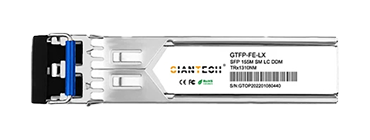
Yes. The SFP+ cages on the fibre line cards are empty and require transceivers plus the matching fibre patch cords. That applies at every port count, so on a 48-port SFP card the optics are a significant part of the total cost. Send us the link plan and we will quote the modules with the card.
Yes — a modular chassis exists precisely so that copper, fibre, 10G and 40G cards can be combined in one switch, in the slots appropriate to the design. Distribute the load so that no one card or supervisor becomes the choke point, and remember that a redundant core design normally calls for two supervisors rather than one.


Get advice, answers, and solutions when you need them. For general questions, contact us at +86 152 7186 6615 / john@infdevice.com