
Intellectual Property
Hot selling product recommendations
View More




















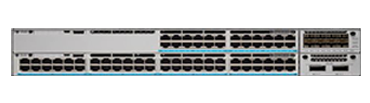
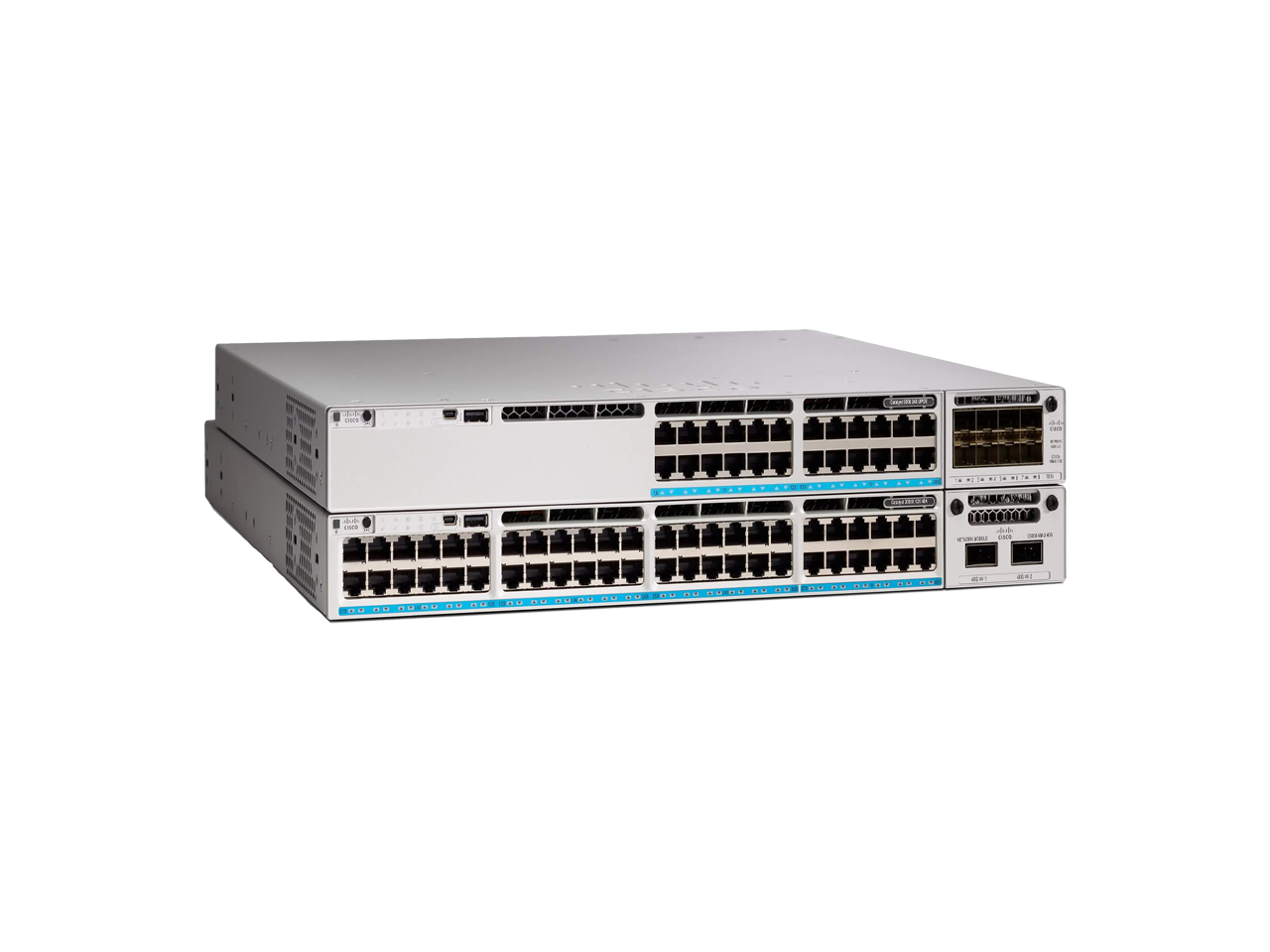
The Cisco Catalyst 1000 Series is a family of fixed-configuration Gigabit Ethernet switches aimed at small sites: branch offices, retail units, clinics, schools and light industrial cabinets. They run the familiar Catalyst feature set and CLI, which matters if your engineers already manage Catalyst 9200 or 9300 switches at larger sites — the Catalyst 1000 behaves the same way, at a fraction of the price and with no software licensing tier to choose.
The range is easier to buy than most Catalyst families, because the part number tells you almost everything:
Every model is fanless in the smaller sizes, supports the standard Catalyst Layer 2 feature set — VLANs, static routing, ACLs, QoS, SNMP and Cisco Discovery Protocol — and can be managed from the web UI, the CLI or Cisco Business Dashboard free of charge.
8, 16, 24 or 48. As a rule of thumb, size the switch for the devices you have today plus roughly a third; these are fixed-configuration chassis, so spare ports are the only expansion headroom you get. The 48-port models cost disproportionately less per port — a 48-port data switch is only a little more than a 24-port PoE switch, so it is worth checking the arithmetic before defaulting to 24.
The main range is Gigabit (C1000-…). The C1000FE models are Fast
Ethernet. FE is still a legitimate choice for low-bandwidth endpoints — building management
controllers, older terminals, access control — but it is not the switch to buy if IP
cameras, wireless access points or desk phones will connect to it.
This is the decision people most often get wrong, because both are sold as "PoE+ switches". The difference is the total power budget the switch can deliver:
Add up the draw of everything you plan to power — an 802.11ax access point can pull 30 W on its own — and leave headroom. If the total is close to the budget, take the FP model.
2G gives two 1G SFP ports, 4G gives four 1G SFP ports, and 4X gives four 10G SFP+ ports. Choose 4X where the switch aggregates into a fibre backbone or a Catalyst 9200/9300 core; for a stand-alone branch switch, 2G or 4G is normally enough. Note that the 8-port models use combined SFP/RJ45 combo uplink ports.
Most models have an internal PSU. The -E- variants ship with an external power supply instead, which suits confined installations and cabinets where heat and space are tight, or where you prefer to replace a failed PSU without swapping the switch.
| Model | Ports | PoE Budget | Uplinks | PSU | Price |
|---|---|---|---|---|---|
| C1000-8T-2G-L | 8 x 1G | — | 2 x 1G SFP combo | Internal | US$319.00 |
| C1000-8T-E-2G-L | 8 x 1G | — | 2 x 1G SFP combo | External | US$310.00 |
| C1000-8P-2G-L | 8 x 1G PoE+ | 67 W | 2 x 1G SFP combo | Internal | US$434.00 |
| C1000-8P-E-2G-L | 8 x 1G PoE+ | 67 W | 2 x 1G SFP combo | External | US$388.00 |
| C1000-8FP-2G-L | 8 x 1G PoE+ | 120 W | 2 x 1G SFP combo | Internal | US$807.00 |
| C1000-16T-2G-L | 16 x 1G | — | 2 x 1G SFP | Internal | US$419.00 |
| C1000-16P-2G-L | 16 x 1G PoE+ | 120 W | 2 x 1G SFP | Internal | US$663.00 |
| C1000-16P-E-2G-L | 16 x 1G PoE+ | 120 W | 2 x 1G SFP | External | US$853.00 |
| C1000-16FP-2G-L | 16 x 1G PoE+ | 240 W | 2 x 1G SFP | Internal | US$1,217.00 |
| C1000-24T-4G-L | 24 x 1G | — | 4 x 1G SFP | Internal | US$473.00 |
| C1000-24T-4X-L | 24 x 1G | — | 4 x 10G SFP+ | Internal | US$873.00 |
| C1000-24P-4G-L | 24 x 1G PoE+ | 195 W | 4 x 1G SFP | Internal | US$1,015.00 |
| C1000-24P-4X-L | 24 x 1G PoE+ | 195 W | 4 x 10G SFP+ | Internal | US$906.00 |
| C1000-24FP-4G-L | 24 x 1G PoE+ | 370 W | 4 x 1G SFP | Internal | US$1,595.00 |
| C1000-48T-4G-L | 48 x 1G | — | 4 x 1G SFP | Internal | US$679.00 |
| C1000-48T-4X-L | 48 x 1G | — | 4 x 10G SFP+ | Internal | US$1,293.00 |
| C1000-48P-4G-L | 48 x 1G PoE+ | 370 W | 4 x 1G SFP | Internal | US$1,236.00 |
| C1000-48P-4X-L | 48 x 1G PoE+ | 370 W | 4 x 10G SFP+ | Internal | US$1,328.00 |
| C1000-48FP-4G-L | 48 x 1G PoE+ | 740 W | 4 x 1G SFP | Internal | US$4,079.00 |
| C1000FE-24P-4G-L | 24 x FE PoE+ | Fast Ethernet | 2 x 1G SFP + 2 x 1G combo | Internal | US$1,068.45 |
| C1000FE-48T-4G-L | 48 x FE | — | 2 x 1G SFP + 2 x 1G combo | Internal | US$831.00 |
Prices are our current selling prices in US dollars, excluding shipping. Click a model number for the full specification table and availability.
The main Catalyst 1000 range has Gigabit access ports. The C1000FE models have Fast Ethernet (10/100) access ports while keeping Gigabit SFP uplinks. FE is adequate for low-bandwidth devices — controllers, sensors, older terminals — and costs less, but it is the wrong platform for cameras, access points or desk phones.
Both are PoE+ switches; the difference is the amount of power they can distribute. A 24-port P model delivers 195 W in total, while a 24-port FP model delivers 370 W. On the 8- and 16-port sizes the gap is similar (67 W and 120 W for P; 120 W and 240 W for FP). Always total the draw of the powered devices and leave headroom — PoE budgets are shared across all ports, not per port.
If the switch feeds a fibre backbone or a Catalyst 9200/9300 core, yes — a single 10G uplink removes the aggregation bottleneck for an entire floor. For a self-contained branch switch that only reaches the internet, 1G uplinks are sufficient and the 4G models cost materially less.
The -E- models are supplied with an external power supply rather than an internal one. They are useful in shallow cabinets and confined spaces, and they let you replace a failed PSU without removing the switch. Functionally the switching features are identical to the equivalent internal-PSU model.
No. The Catalyst 1000 comes with its Layer 2 feature set enabled — there is no Network Essentials / Advantage tier to choose between, and no per-device licensing. This is one of the reasons the range is popular for small sites.
As many as the budget allows, and no more. Divide the switch's total budget by the draw of the device: a 195 W switch comfortably runs six 30 W access points, whereas the same six devices would exceed a 67 W model. Full-rate 802.3at devices negotiate up to 30 W each, so the port count is rarely the limiting factor — the budget is.
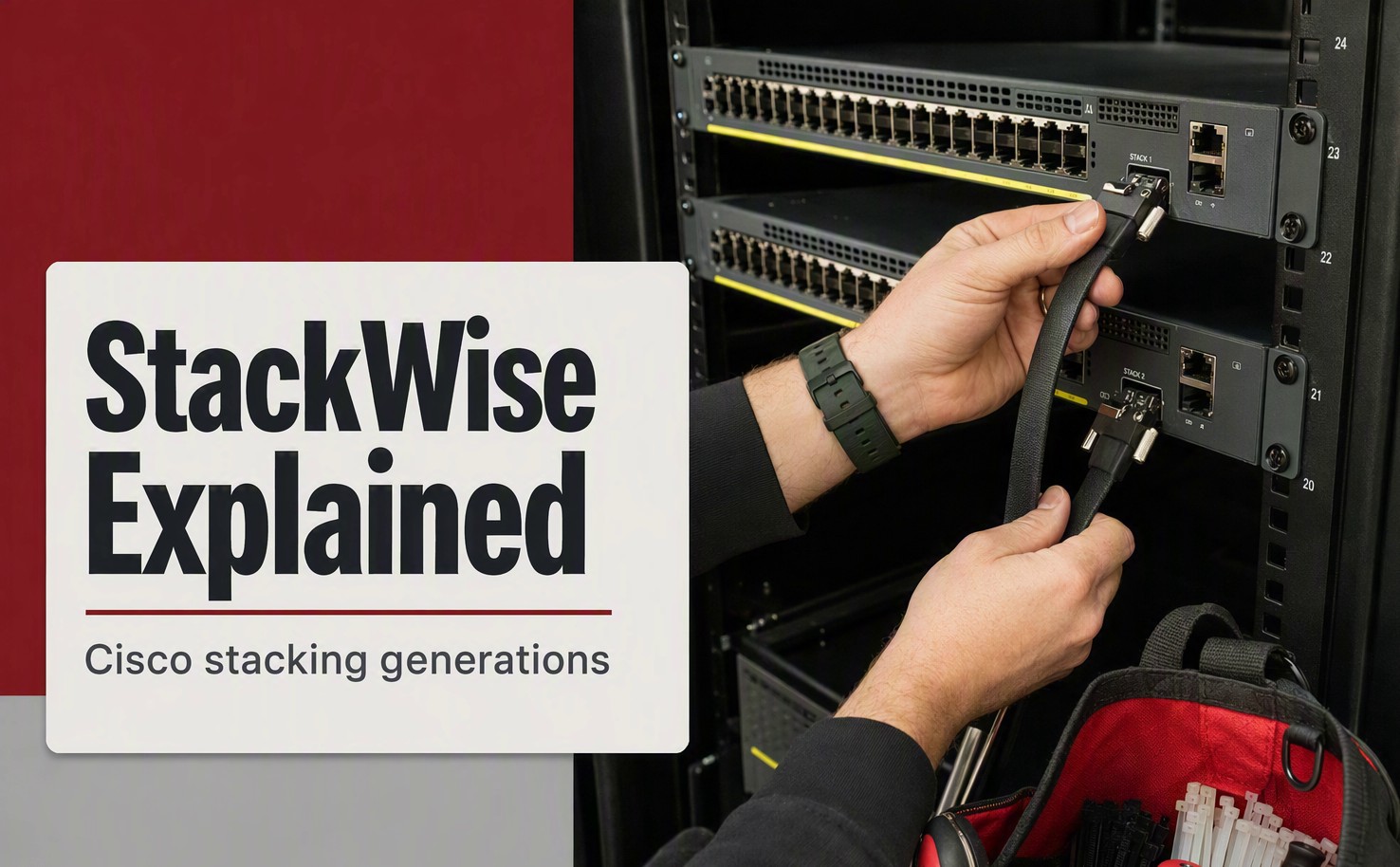
The Catalyst 1000 is a stand-alone switch and does not support switch stacking in the Catalyst 9300 sense. Where a design needs a single logical switch across several chassis, tell us and we will price the equivalent Catalyst 9200 configuration instead.


Get advice, answers, and solutions when you need them. For general questions, contact us at +86 152 7186 6615 / john@infdevice.com