
Intellectual Property
Hot selling product recommendations
View More





















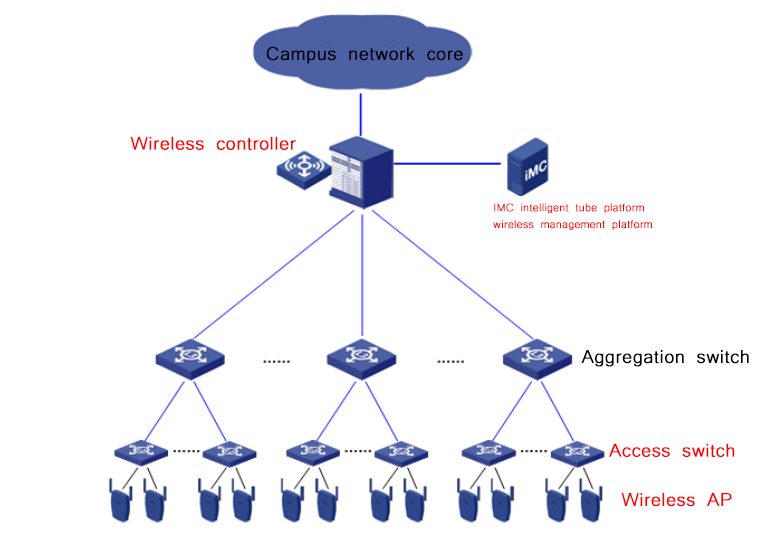
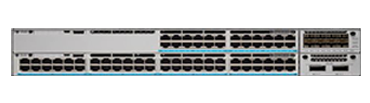
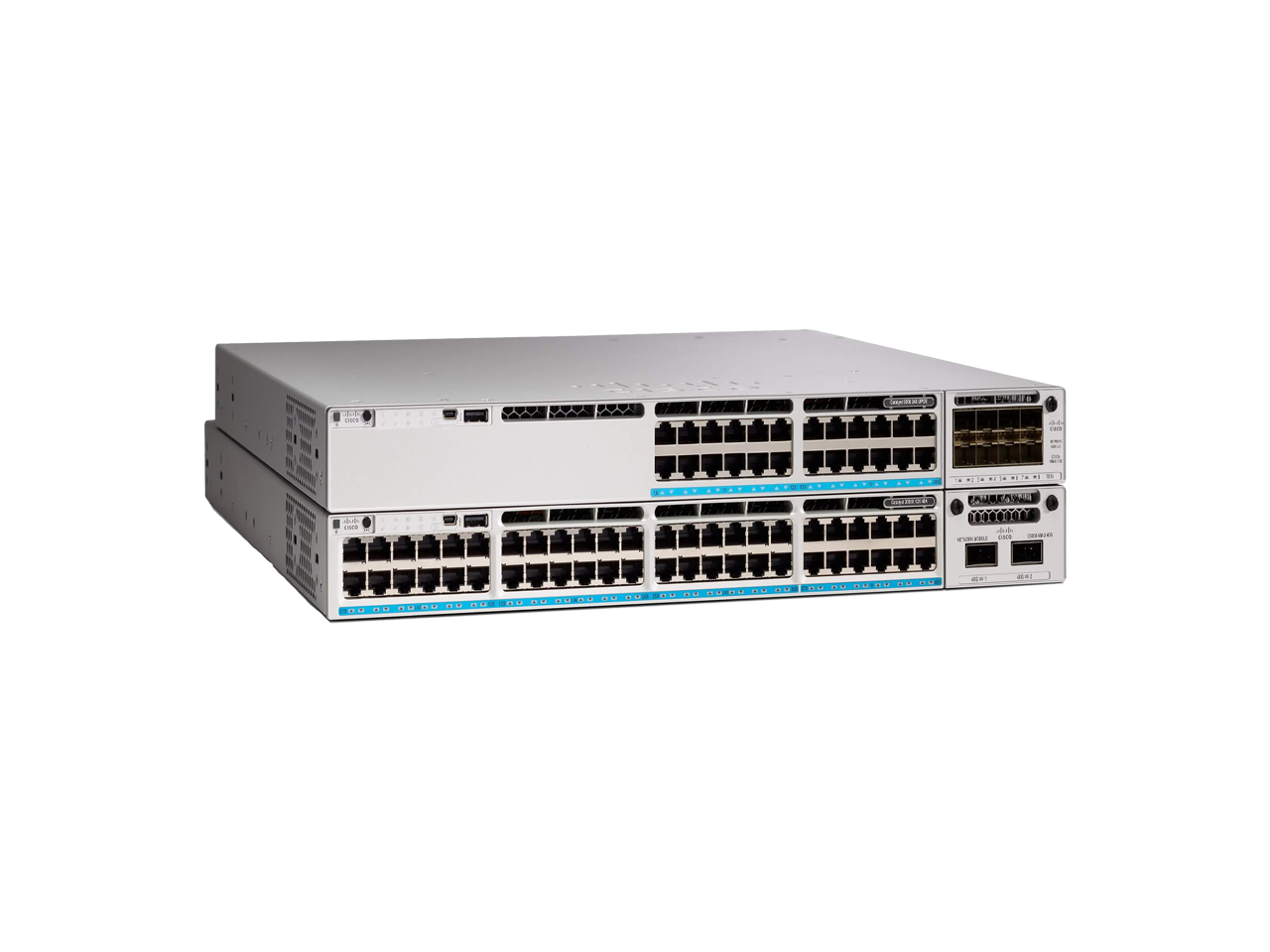
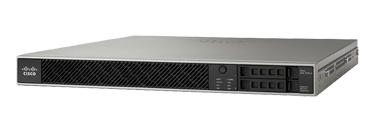
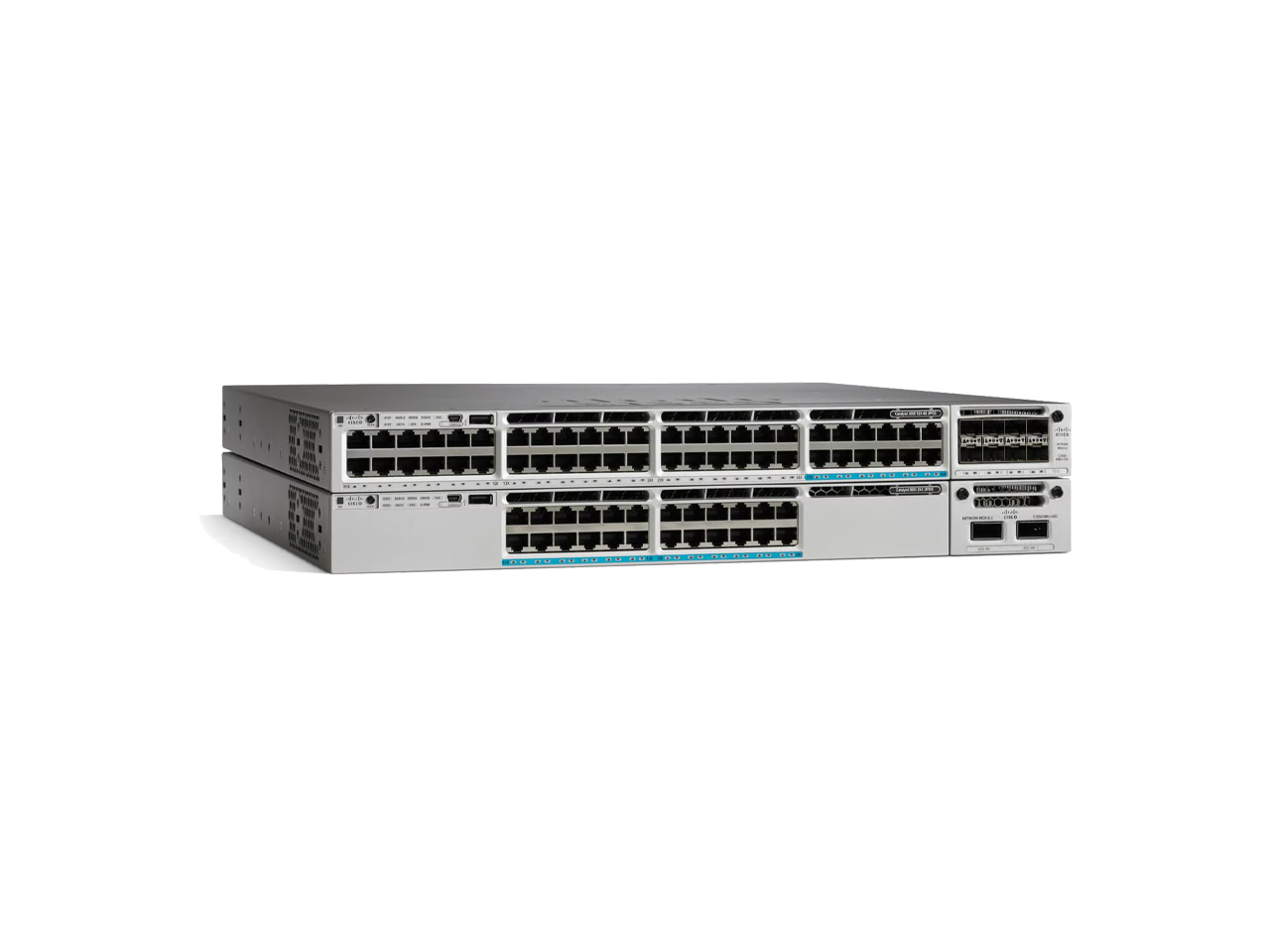
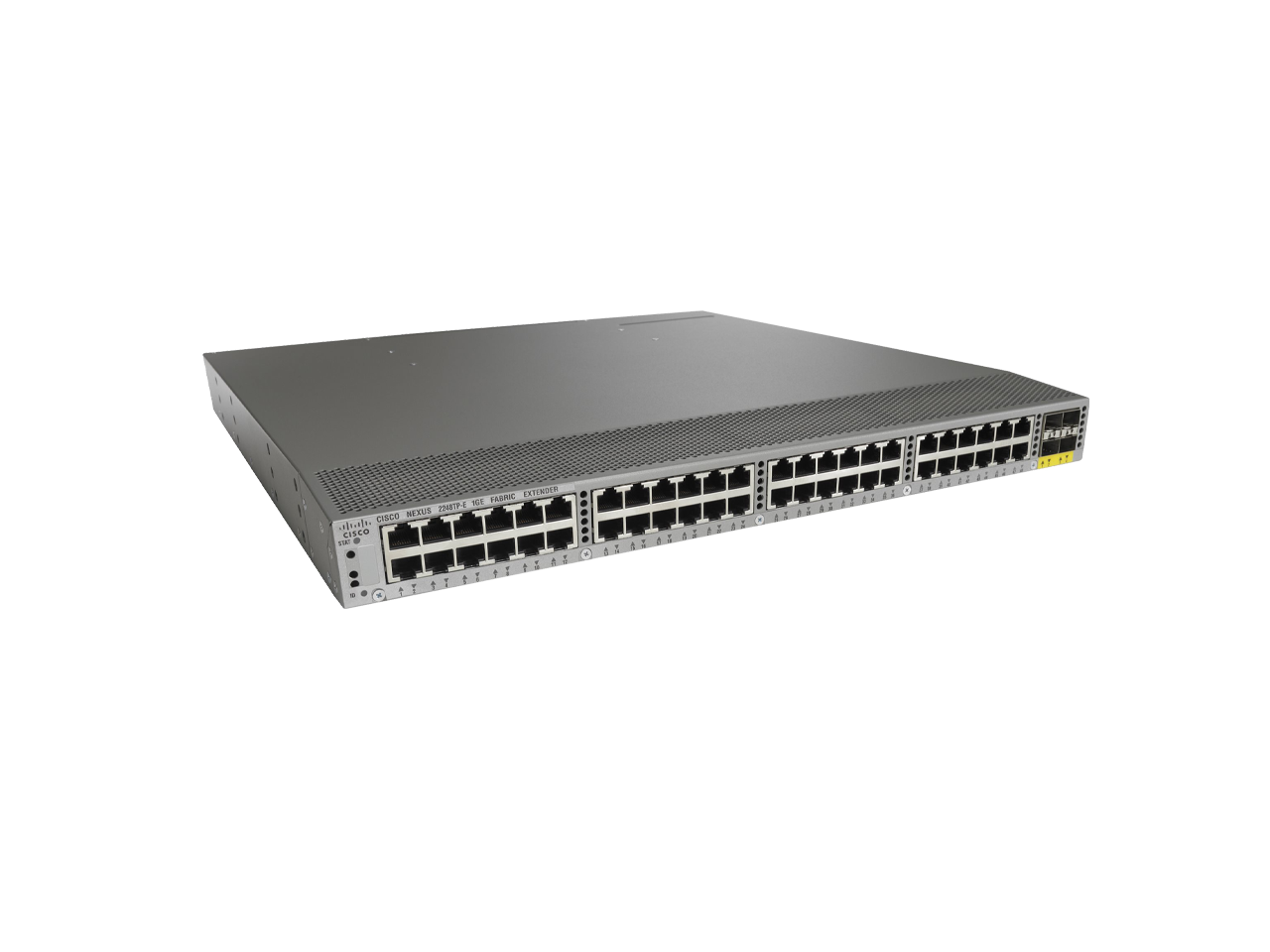
The Cisco Catalyst 9500 Series is the fixed-configuration core and aggregation platform of the Catalyst campus family. Where a Catalyst 9300 sits in the wiring closet, the 9500 sits one layer up — it aggregates a building's access switches and feeds the campus core or the data centre, which is why every model in the range starts at 10G and goes up to 100G.
Two things separate the models in this range:
All models are 1U fixed platforms with the same Catalyst IOS-XE software, the same StackWise Virtual capability for pairing switches into one logical unit, and the same optional network module slot — the C9500-NM-8X, which adds eight more 10G ports without changing chassis.
Several models carry dedicated uplink ports in addition to their access ports — for example C9500-16X-2Q-A (16 x 10G access plus 2 x 40G uplinks) and C9500-40X-2Q-A (40 x 10G plus 2 x 40G). Where the switch is the last hop before a 40G or 100G spine, these bundle models save you from spending access ports on uplinks.
Network Essentials (E) covers the Layer 2 and basic Layer 3 feature set, including routing, VRF-lite and StackWise Virtual. Network Advantage (A) adds the advanced features — full Layer 3 routing protocols, SD-Access fabric membership, advanced security and network virtualisation. Match the licence to the role: an aggregation switch that only forwards does not need Advantage; a switch that will carry VRFs, participate in a fabric or terminate routing domains does.
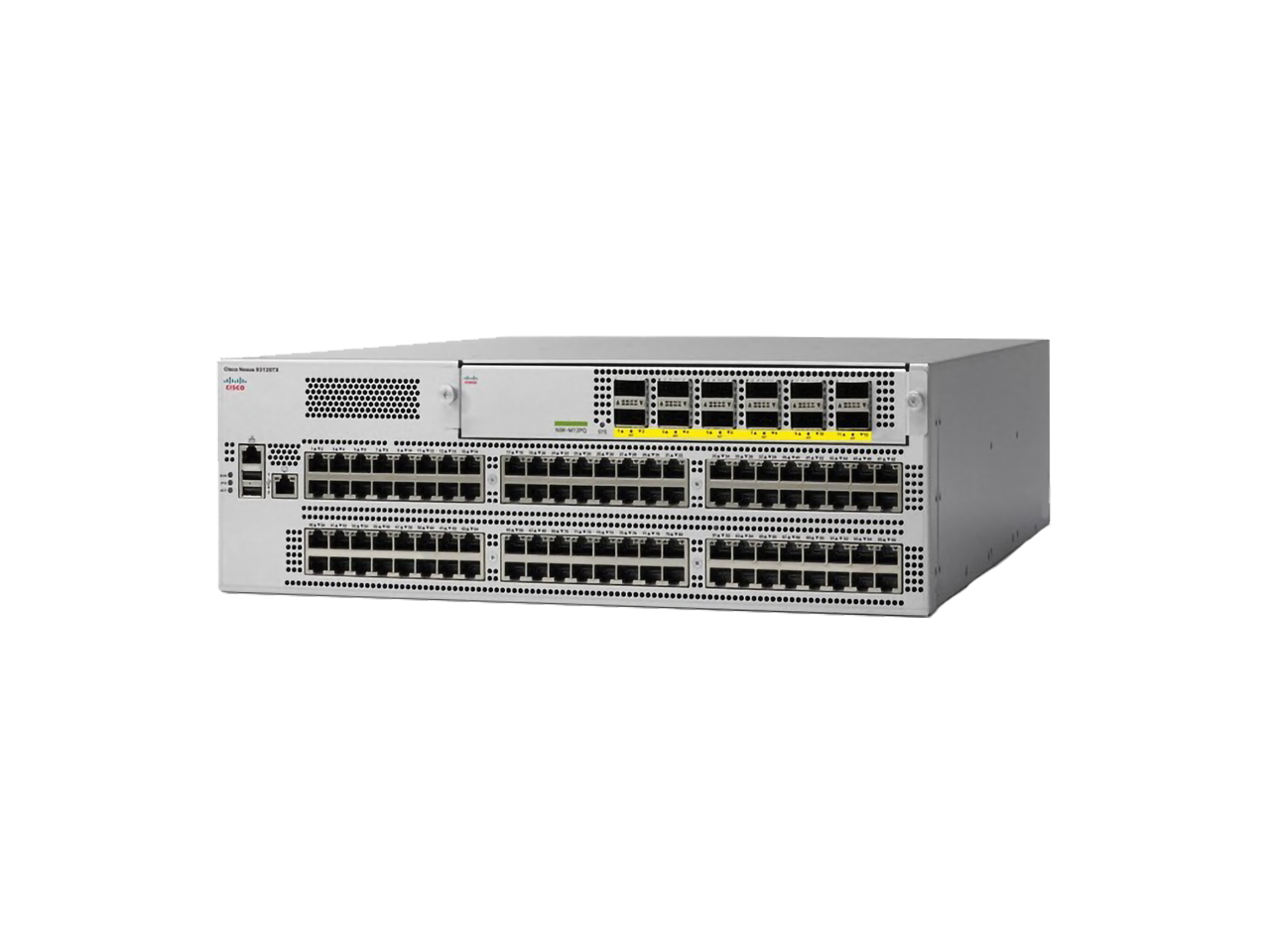
The Catalyst 9500 is predominantly a fibre platform — the numbered access ports take SFP+ or QSFP optics. Where you need to connect copper devices directly, either combine a 9500 as the aggregation tier with 9300 access switches beneath it, or use one of the multirate Y4C models and populate with the appropriate transceivers.
The C9500-NM-8X network module adds 8 x 10GE ports to any Catalyst 9500 with a spare module slot, which is usually cheaper than moving up a chassis size. The C9K-F1-SSD-240G is a 240 GB pluggable SSD used for application hosting, logs and tracing on the switch itself.
| Model | Port Configuration | Role | Licence | Price |
|---|---|---|---|---|
| C9500-16X-A | 16 x 10G | Aggregation | Network Advantage | US$7,800.00 |
| C9500-16X-E | 16 x 10G | Aggregation | Network Essentials | US$7,023.00 |
| C9500-16X-2Q-A | 16 x 10G + 2 x 40G | Aggregation | Network Advantage | US$8,416.70 |
| C9500-16X-2Q-E | 16 x 10G + 2 x 40G | Aggregation | Network Essentials | US$9,902.00 |
| C9500-24X-A | 24 x 10G | Aggregation | Network Advantage | US$5,205.00 |
| C9500-24X-E | 24 x 10G | Aggregation | Network Essentials | US$9,654.00 |
| C9500-40X-A | 40 x 10G | Aggregation | Network Advantage | US$5,039.00 |
| C9500-48X-A | 48 x 10G | Aggregation | Network Advantage | US$9,756.42 |
| C9500-24Y4C-A | 24 x 1/10/25G + 4 x 40/100G | Aggregation / multirate | Network Advantage | US$10,004.16 |
| C9500-24Y4C-E | 24 x 1/10/25G + 4 x 40/100G | Aggregation / multirate | Network Essentials | US$7,203.00 |
| C9500-48Y4C-A | 48 x 1/10/25G + 4 x 40/100G | Aggregation / multirate | Network Advantage | US$7,273.00 |
| C9500-48Y4C-E | 48 x 1/10/25G + 4 x 40/100G | Aggregation / multirate | Network Essentials | US$10,295.00 |
| C9500-12Q-A | 12 x 40G | Spine / core | Network Advantage | US$13,472.00 |
| C9500-24Q-A | 24 x 40G | Spine / core | Network Advantage | US$4,096.00 |
| C9500-32C-A | 32 x 100G | Spine / core | Network Advantage | US$4,986.00 |
| C9500-32QC-A | 32 x 40/100G | Spine / core | Network Advantage | US$17,258.00 |
Prices are our current selling prices in US dollars, excluding shipping. Click a model number for the full specification table and availability.
| Part | Function | Price |
|---|---|---|
| C9500-NM-8X | Network module adding 8 x 10GE ports to a Catalyst 9500 | US$920.00 |
| C9K-F1-SSD-240G | 240 GB pluggable SSD for application hosting, logs and tracing | US$2,990.52 |
They sit at different layers. The 9300 is a stackable access switch — it connects endpoints such as phones, cameras, access points and PCs. The 9500 is a fixed-configuration aggregation and core platform: it connects the 9300s together and runs at 10G, 25G, 40G or 100G. A typical campus design uses 9300s in the closets and 9500s as the building or campus aggregation layer.
Essentials covers Layer 2 plus basic Layer 3, VRF-lite and StackWise Virtual. Advantage
adds full routing protocols, SD-Access fabric membership, advanced security and network
virtualisation. Choose Advantage if the switch will run routing protocols, join a
fabric, or host VRFs; choose Essentials where it only aggregates and forwards. The
licence is indicated by the last letter of the model number — -A or
-E.
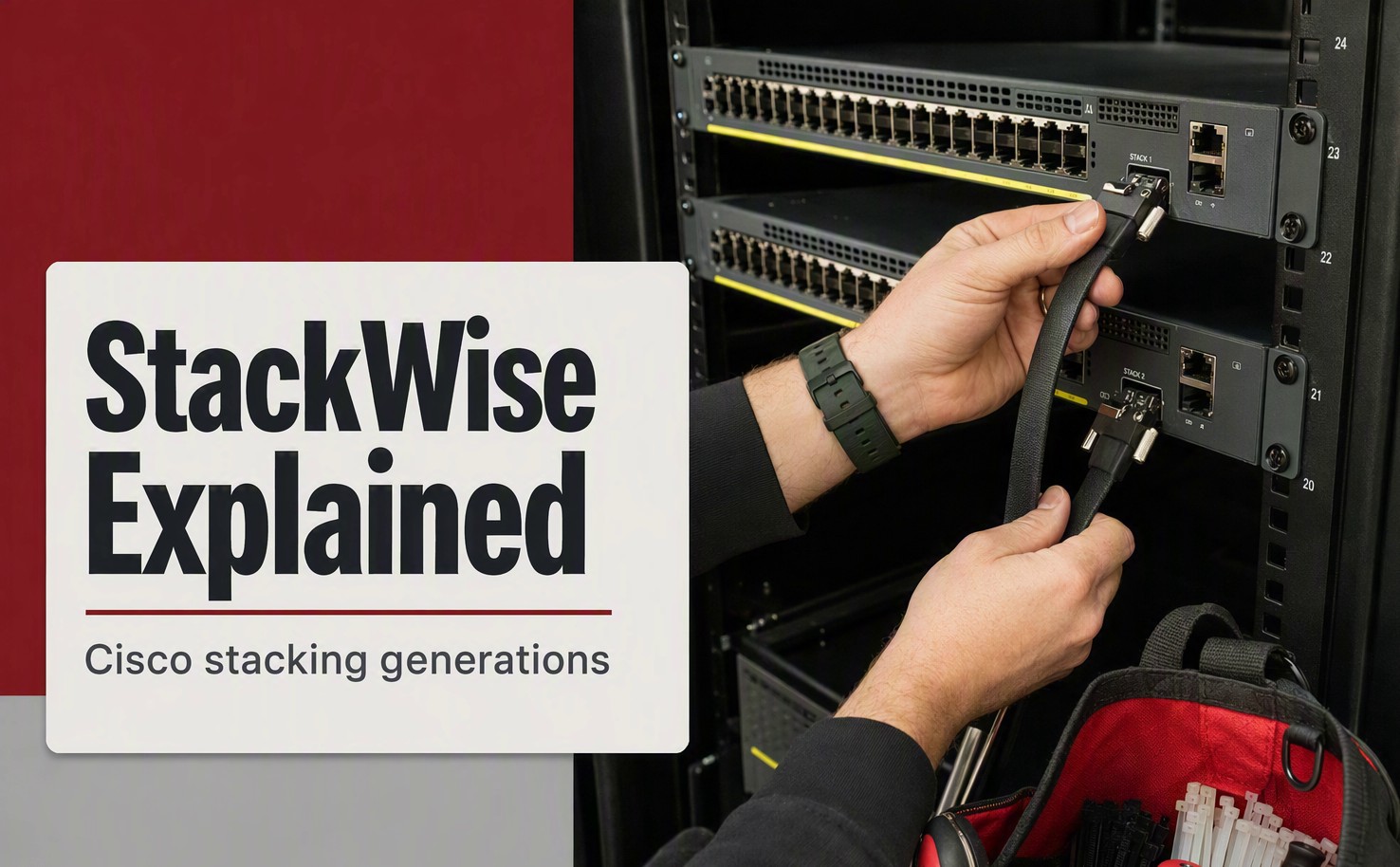
Yes, using StackWise Virtual, which pairs two chassis into a single logical device for management and forwarding. Note that this is a different mechanism from the StackWise cabling used on the Catalyst 9300 access switches — the two are not interchangeable and the 9500 pair uses its own uplink ports.
Multirate access ports. On C9500-24Y4C and C9500-48Y4C, each numbered port accepts a 1G, 10G or 25G transceiver, and the four additional ports run at 40G or 100G. That means a single chassis can serve a 10G access layer today and be re-populated with 25G optics later without replacing the switch. The X models are fixed at 10G on the numbered ports.
Eight. The C9500-NM-8X network module fits the spare module slot and adds 8 x 10GE ports. It is listed in the expansion table above. If you need more than one module's worth of additional ports, it is usually more economical to move to a larger fixed model or to a second chassis.
Yes. Give us the model and tell us the distances between cabinets or buildings and we will quote the correct optics and cabling alongside the switches.


Get advice, answers, and solutions when you need them. For general questions, contact us at +86 152 7186 6615 / john@infdevice.com