
Intellectual Property
Hot selling product recommendations
View More




















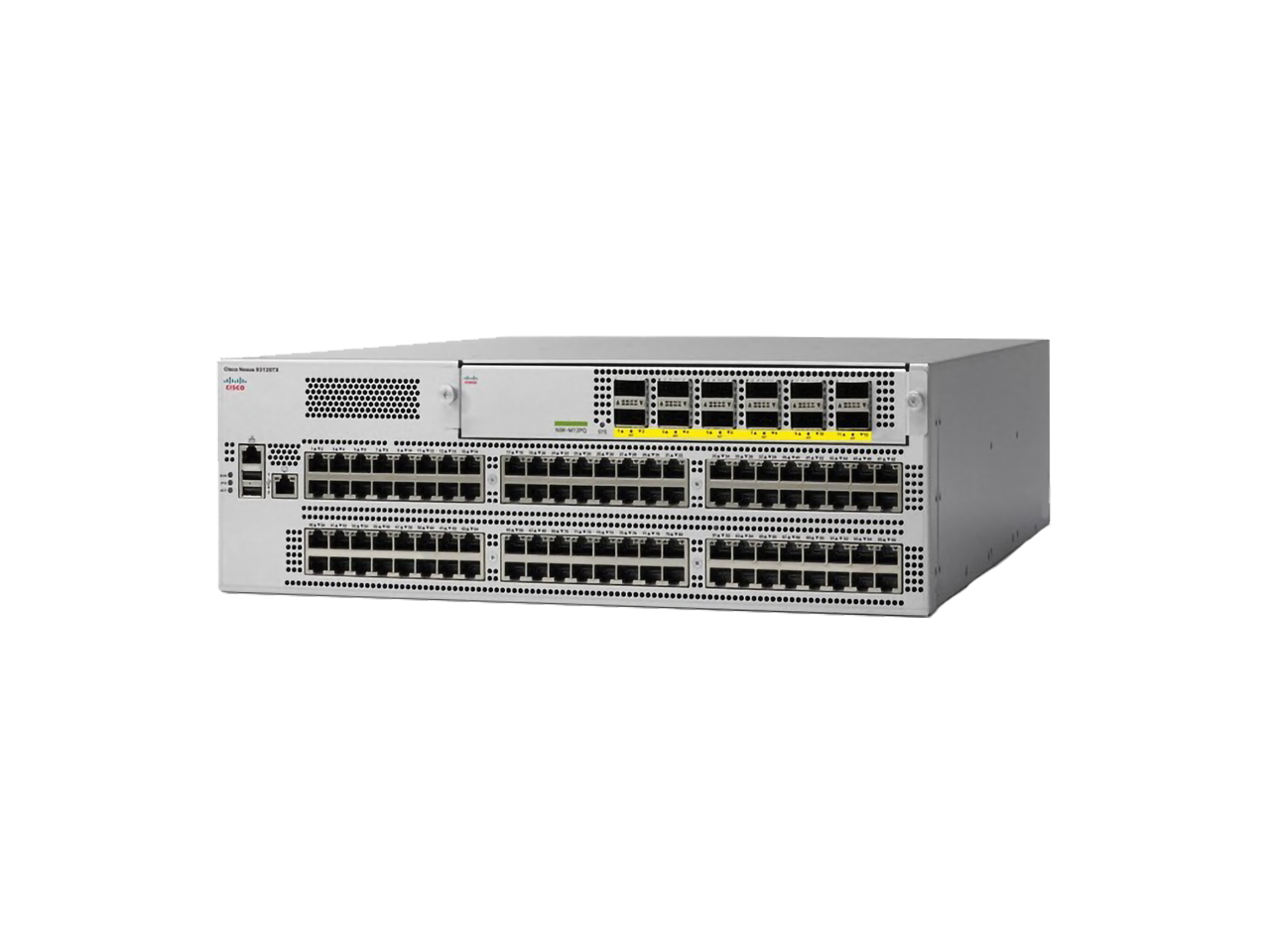
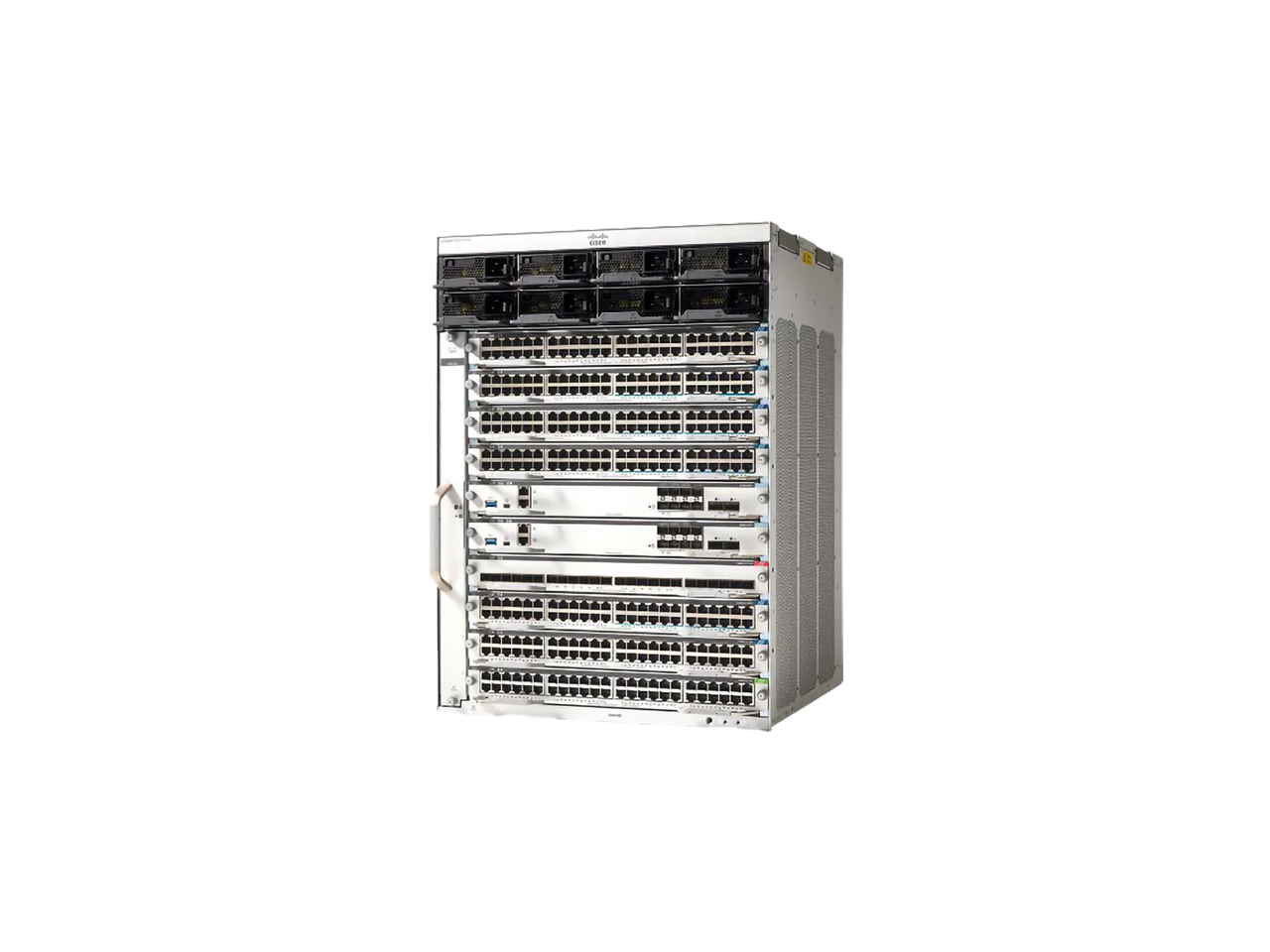
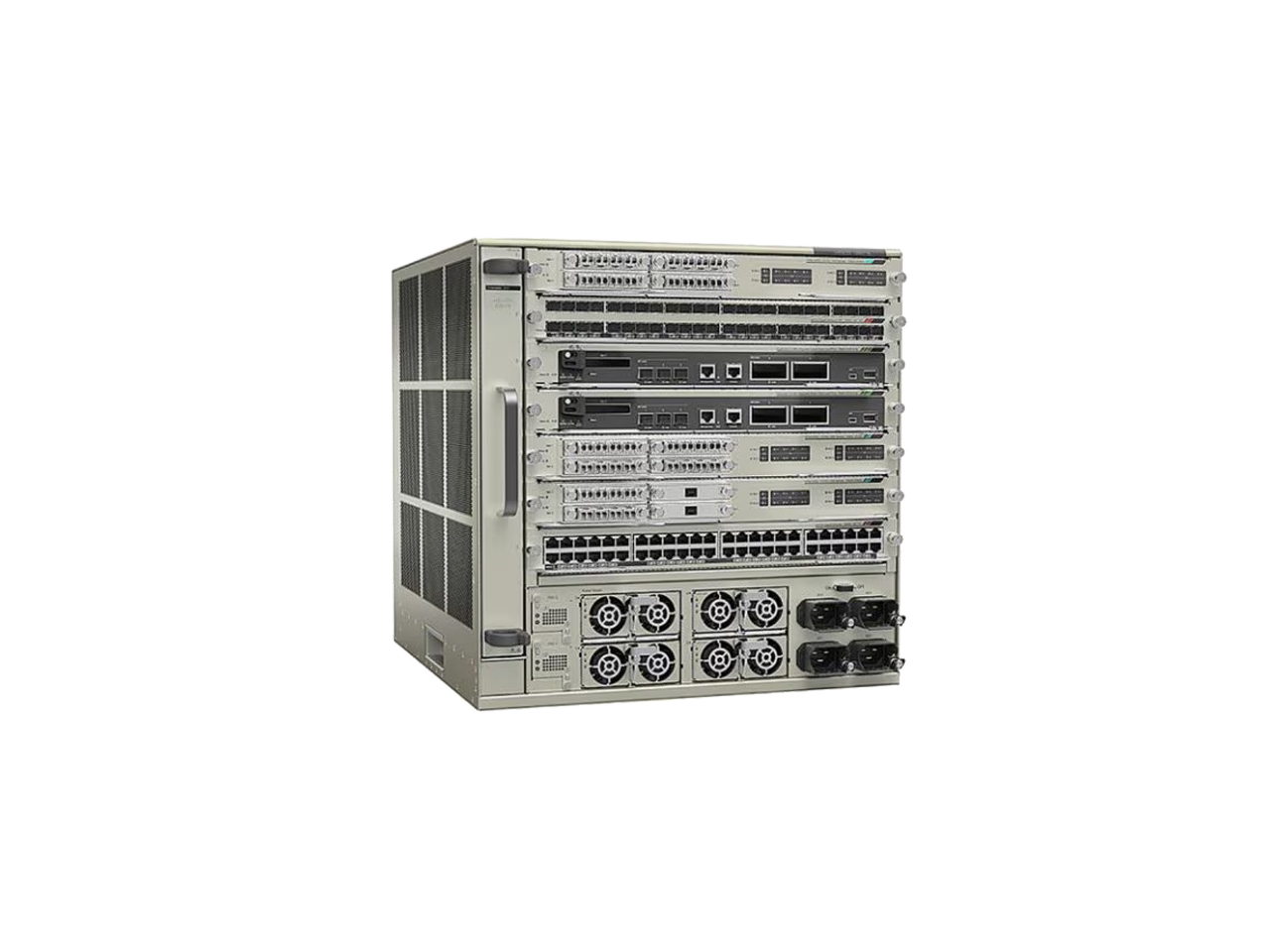
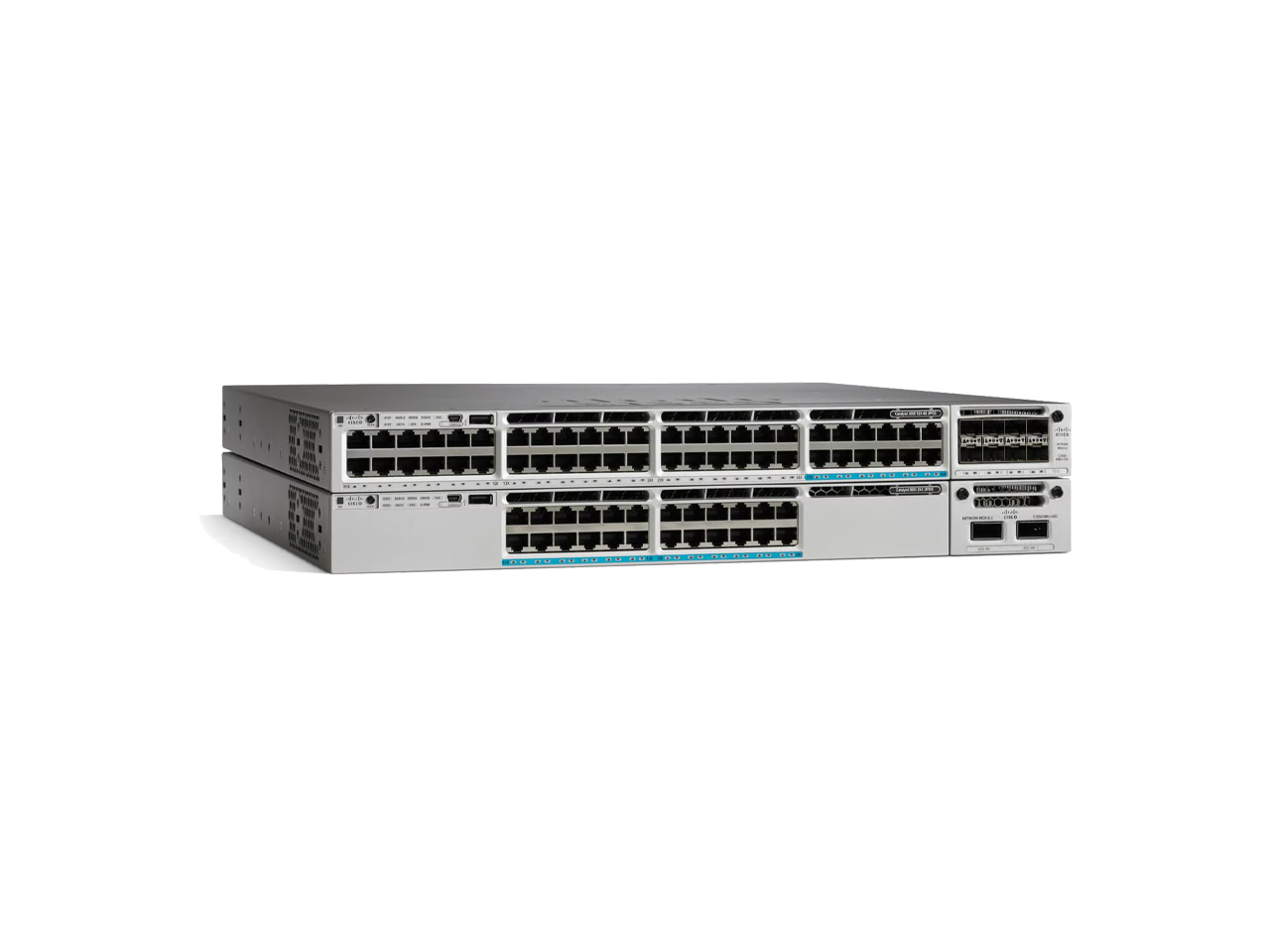
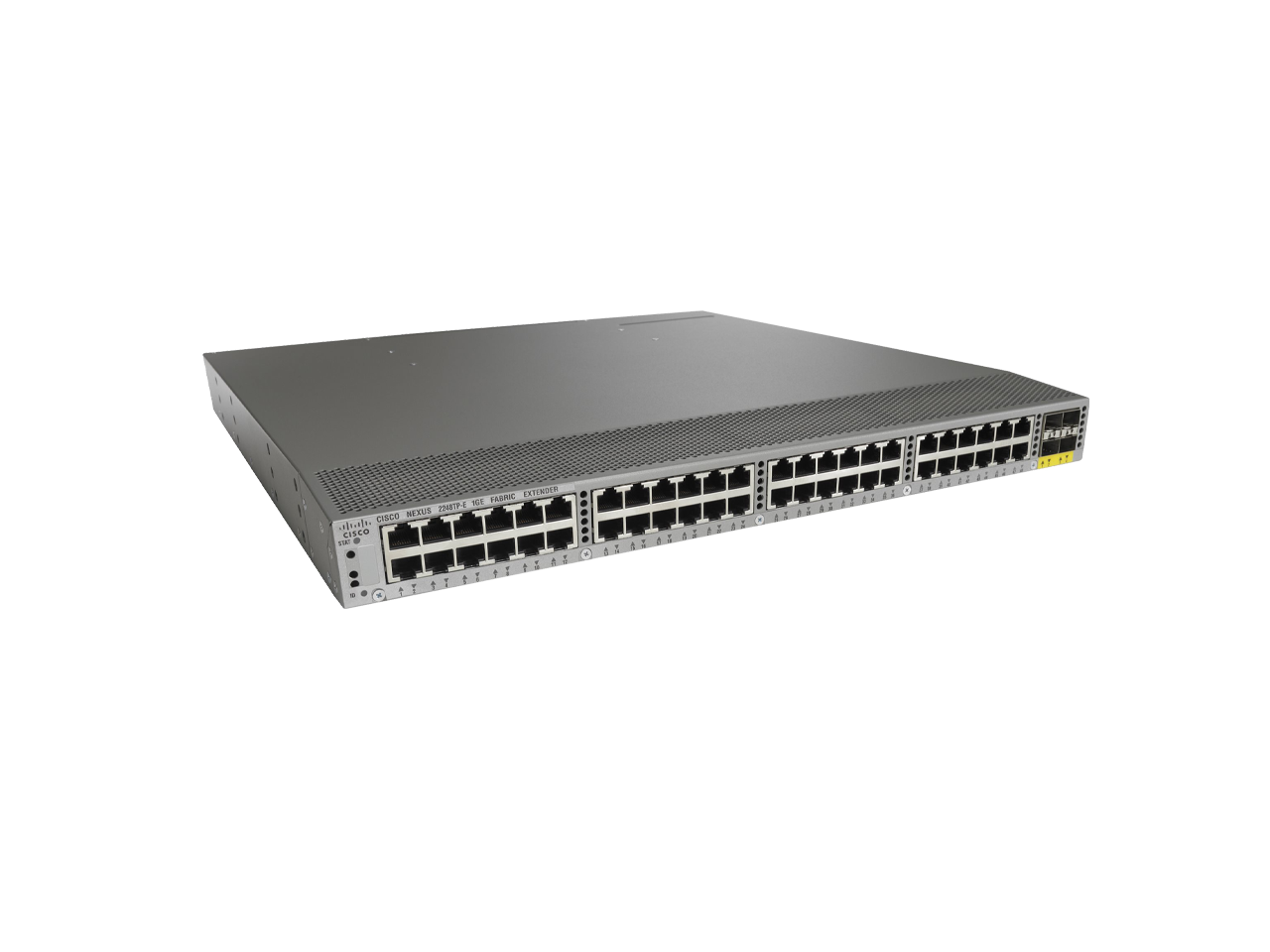
The Cisco Nexus 7000 is a modular data-centre switch family — the chassis-and-line-card platform that carries a campus core, a data-centre aggregation layer or a service-provider point of presence. It is a different class of equipment from a fixed top-of-rack switch: the chassis provides the fabric and the slots, and the forwarding capacity, port mix and redundancy are all set by the supervisor engines, line cards and fabric modules you put in it.
Two generations of chassis are stocked here, and they are the first thing to distinguish:
N7K-C70….N77-C77….Both use the same NX-OS software model and the same modular design; the difference is capacity per slot and which supervisor generation they take. A 7706 and a 7009 are physically similar in size, but they are not interchangeable, and the choice between them determines which line cards and supervisors are available to you.
A model such as C1-N7010-B2S2-R packs four pieces of information:
Line cards follow their own convention: N7K-F348XP-25 is an F3-series card
with 48 ports of 10 Gigabit Ethernet, N7K-M324FQ-25L an M3-series card with 24
ports of 40 Gigabit Ethernet, and N7K-F306CK-25 an F3 card with 6 ports of
40 Gigabit Ethernet. The F, M and FCoE prefixes denote the card family —
the letters after the port count denote the port type (XP for 10G SFP+, FQ for
40G QSFP, CK for 40G).
Decide this before anything else, because it determines the line cards and supervisors available to you. The Nexus 7700 is the later platform with higher per-slot forwarding capacity — the right choice for a new deployment, a data-centre aggregation role, or anywhere the fabric has to carry dense 10G and 40G. The Nexus 7000 is the earlier generation, and remains a sensible choice where capacity per slot is not the constraint and the priority is matching an existing installed base of N7K line cards. The two families do not share line cards, so this decision is effectively permanent.
Cisco names the chassis after its slot count, which makes sizing unusually direct:
Remember that redundant supervisors consume slots. An 18-slot chassis with two supervisors has sixteen slots for line cards, not eighteen — and a 4-slot chassis with redundant supervisors has only two.
The supervisor is the control plane, and the -R bundles ship with two of them. That matters in two ways: it consumes a slot (see above), and it is what allows an in-service software upgrade without dropping the control plane. A production core without redundant supervisors is a scheduled-outage waiting to happen — if the chassis is going into a live network, plan for the redundant configuration from the start rather than retrofitting it.
The C1-N7… models in this catalogue are Cisco ONE SKUs. They bundle the
chassis, line cards and supervisor into a single orderable configuration, and the software is
delivered under a subscription model rather than a perpetual licence tied to the hardware.
Commercially that changes three things: the up-front cost profile, what happens at renewal, and
how the asset is accounted for. Functionally the hardware is the same. If your procurement
model does not accommodate software subscriptions, order the equivalent standard
N7K- or N77- part numbers instead — both are shown on this page so
the two can be compared directly.
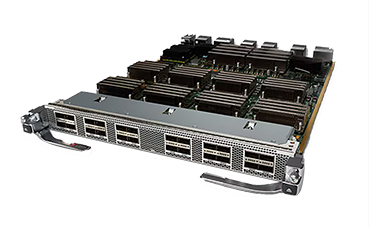
Line cards are where the port mix is set. The families stocked here span 10G SFP+, 40G QSFP and FCoE-capable variants, and the price spread is wide — from under US$6,000 for a 48-port 10G F3 card to over US$65,000 for a dense 40G M3 card. Since a chassis is bought for years and the cards can be changed, the practical approach is to buy the chassis and supervisor for the lifetime requirement and the line cards for the traffic you have now.
| Model | Type | Price |
|---|---|---|
| N7K-C7018-FAN | Fan tray for the 7018 chassis | US$1,554.10 |
| N7K-C7004 | 4-slot chassis | US$9,007.00 |
| N7K-C7009 | 9-slot chassis | US$18,015.00 |
| N7K-C7010 | 10-slot chassis | US$18,015.00 |
| N7K-C7004-S2 | 4-slot chassis with Supervisor 2 | US$26,630.00 |
| N7K-C7018 | 18-slot chassis | US$27,022.00 |
| Model | Type | Price |
|---|---|---|
| N77-C7718-FAN | Fan tray for the 7718 chassis | US$2,730.00 |
| N77-C7702 | 2-slot chassis | US$5,026.00 |
| N77-C7706 | 6-slot chassis | US$12,453.00 |
| N77-C7710 | 10-slot chassis | US$20,567.00 |
| N77-C7718 | 18-slot chassis | US$34,583.00 |
| Model | Configuration | Price |
|---|---|---|
| N77-C7706-B33S3E | 6-slot chassis, B33 line-card set, S3E supervisor | US$53,400.00 |
| N77-C7706-B33S3E-R | As above, redundant supervisor | US$58,048.00 |
| N77-C7706-B36S3E | 6-slot chassis, B36 line-card set, S3E supervisor | US$69,105.00 |
| N77-C7706-B36S3E-R | As above, redundant supervisor | US$84,811.00 |
| N77-C7710-B33S3E | 10-slot chassis, B33 line-card set, S3E supervisor | US$81,670.00 |
| N77-C7710-B33S3E-R | As above, redundant supervisor | US$106,800.00 |
| N77-C7710-B36S3E | 10-slot chassis, B36 line-card set, S3E supervisor | US$106,800.00 |
| Model | Ports | Price |
|---|---|---|
| N7K-F348XP-25 | 48 x 10 Gigabit Ethernet (F3) | US$5,937.76 |
| N7K-FCOE-F348XP | 48 x 10G with FCoE (F3) | US$9,229.99 |
| N7K-F306CK-25 | 6 x 40 Gigabit Ethernet (F3) | US$54,292.98 |
| N7K-M324FQ-25L | 24 x 40 Gigabit Ethernet (M3) | US$65,928.00 |
| N7K-M348XP-25L | 48 x 10 Gigabit Ethernet (M3) | US$65,928.00 |
| Model | Chassis | Redundant Supervisor | Price |
|---|---|---|---|
| C1-N7702 | Nexus 7702 (2 slot) | No | US$5,071.00 |
| C1-N7706-EN-B22S2E | Nexus 7706 (6 slot) | No | US$16,859.00 |
| C1-N7018 | Nexus 7018 (18 slot) | No | US$23,767.00 |
| C1-N7004-S2 | Nexus 7004 (4 slot), S2 | No | US$25,352.00 |
| C1-N7702-S2E-AC | Nexus 7702 (2 slot), S2E | No | US$27,253.00 |
| C1-N7718 | Nexus 7718 (18 slot) | No | US$31,689.00 |
| C1-N7004-S2E | Nexus 7004 (4 slot), S2E | No | US$33,274.00 |
| C1-N7004-S2-R | Nexus 7004 (4 slot), S2 | Yes | US$41,197.00 |
| C1-N7009-B2S2 | Nexus 7009 (9 slot), S2 | No | US$47,535.00 |
| C1-N7706-B23S2E | Nexus 7706 (6 slot), S2E | No | US$48,876.00 |
| C1-N7706-B26S2E | Nexus 7706 (6 slot), S2E | No | US$53,872.00 |
| C1-N7009-B2S2E | Nexus 7009 (9 slot), S2E | No | US$57,041.00 |
| C1-N7706-B23S2E-R | Nexus 7706 (6 slot), S2E | Yes | US$57,041.00 |
| C1-N7010-B2S2 | Nexus 7010 (10 slot), S2 | No | US$61,795.00 |
| C1-N7710-B23S2E | Nexus 7710 (10 slot), S2E | No | US$63,379.00 |
| C1-N7004-S2E-R | Nexus 7004 (4 slot), S2E | Yes | US$64,963.00 |
| C1-N7009-B2S2-R | Nexus 7009 (9 slot), S2 | Yes | US$67,340.00 |
| C1-N7706-B26S2E-R | Nexus 7706 (6 slot), S2E | Yes | US$69,717.00 |
| C1-N7010-B2S2E | Nexus 7010 (10 slot), S2E | No | US$71,301.00 |
| C1-N7010-B2S2-R | Nexus 7010 (10 slot), S2 | Yes | US$81,601.00 |
| C1-N7710-B26S2E | Nexus 7710 (10 slot), S2E | No | US$82,393.00 |
| C1-N7009-B2S2E-R | Nexus 7009 (9 slot), S2E | Yes | US$88,730.00 |
| C1-N7710-B23S2E-R | Nexus 7710 (10 slot), S2E | Yes | US$88,730.00 |
| C1-N7010-B2S2E-R | Nexus 7010 (10 slot), S2E | Yes | US$102,990.00 |
| C1-N7710-B26S2E-R | Nexus 7710 (10 slot), S2E | Yes | US$107,744.00 |
Prices are our current selling prices in US dollars, excluding shipping. Click a model number for the full specification table and availability. The two line-card prices of US$65,928.00 (N7K-M324FQ-25L and N7K-M348XP-25L) are the same by coincidence of the price list, not a listing error — they are different cards.
Generation and capacity. The Nexus 7700 is the later platform with higher per-slot forwarding capacity and a newer supervisor and fabric generation; its chassis are the 7702, 7706, 7710 and 7718. The Nexus 7000 is the earlier family — 7004, 7009, 7010 and 7018. They do not share line cards, so the choice effectively locks in which cards you can use. Choose the 7700 for a new deployment; choose the 7000 where matching an existing N7K line-card inventory matters more than per-slot capacity.
The chassis slot count minus the supervisors you fit. A 7004 with two supervisors has two line-card slots left; an 7018 with two has sixteen. This is why the -R (redundant) bundles exist: they include the second supervisor rather than leaving you to discover the slot cost later.
Redundant supervisor. C1-N7010-B2S2 includes one Supervisor 2;
C1-N7010-B2S2-R includes two, giving control-plane redundancy so that a software
upgrade or a supervisor failure does not take the control plane down. Compare the two prices
on this page and the cost of the redundancy is visible directly.
Cisco ONE SKUs bundle hardware with a software subscription rather than a perpetual
licence. Functionally the hardware is identical to the equivalent standard part number — what
differs is the commercial model: up-front cost, renewal terms, and how the software is
accounted for. If your procurement does not accommodate subscriptions, the equivalent
N7K- and N77- part numbers are shown on this page so the two can be
compared line by line.
N7K is the platform, M3 the card family (M-series), 24 the port count and FQ the port type — 40 Gigabit Ethernet QSFP in this case. XP denotes 10G SFP+, CK another 40G variant, and the F prefix (as in N7K-F348XP-25) marks the F-series family. FCoE-capable variants carry FCOE in the name.
Within a chassis generation, yes — a 7706 can carry a mix of cards from the families it supports, which is how a single chassis serves both 10G server access and 40G uplinks. The constraint is generation, not family: N7K cards and N77 cards do not interchange between the two chassis generations. Tell us the chassis model and the port mix you need and we will confirm which cards fit before you order.
Yes. Supervisors, fabric modules, power supplies, fan trays and line cards are all available alongside the chassis. For a core chassis it is usually worth quoting the complete configuration at once, so that slot allocation, power budget and fabric capacity are checked together rather than discovered as incompatible after delivery.


Get advice, answers, and solutions when you need them. For general questions, contact us at +86 152 7186 6615 / john@infdevice.com