The Cisco C1111-8P: A Router That Actually Gets Things Done
You know that feeling when you finally find networking gear that doesn't make you want to pull your hair out? That's what the Cisco
C1111-8P brings to the table. This isn't some flashy consumer gadget trying to look cool with RGB lights. It's a proper enterprise router from Cisco's ISR 1100 series that sits in your rack and quietly handles everything you throw at it.
Let me break down what this thing actually does in the real world. Small to medium businesses, branch offices, retail locations – these are where the C1111-8P shines. It's built for organizations that need reliable connectivity without the complexity (and price tag) of larger enterprise solutions. Whether you're running a chain of stores that needs consistent network performance across locations or a growing company that's outgrown your old router, this device slots right into that sweet spot.
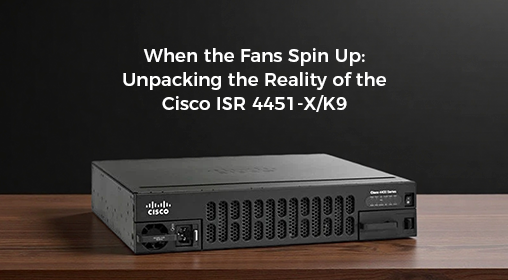
Here is the breakdown of the raw numbers that matter when you are planning your infrastructure:
| Specification Category |
Detail |
| Device Class |
Enterprise Fixed Configuration Router (ISR 1100 Series) |
| Ethernet Interface |
8x Gigabit Ethernet (10/100/1000 Mbps auto-sensing) |
| System Memory |
4 GB DDR4 RAM |
| Processor Architecture |
Multi-core CPU designed for concurrent services |
| Storage |
Default Flash with expansion capabilities for logs/apps |
| Power Input |
12V DC external power supply |
| Power Consumption |
Approx. 66W typical load |
| Physical Dimensions |
323mm (W) × 244mm (D) × 44mm (H) |
| Rack Compatibility |
Standard 1U rack-mountable |
| Unit Weight |
2.59 kg |
| Operating Temp Range |
0°C to 40°C (32°F to 104°F) |
| Humidity Tolerance |
10% to 85% non-condensing |
| Max Altitude |
Up to 3,000 meters |
The physical design is pure Cisco – functional, no-nonsense, built to disappear into your infrastructure. It's got that familiar matte black finish you'd expect from enterprise gear. The front panel keeps things clean with status LEDs that actually tell you something useful. Port indicators, system status, power – all clearly visible without being distracting. The rear is where the action happens with those eight Gigabit Ethernet ports arranged in a logical layout. Cable management isn't an afterthought here. Everything feels solid when you hold it, and at 2.59kg, it has enough heft to feel substantial without being a burden during installation.
What makes this router worth considering comes down to a few key strengths. The multi-core processor handles traffic routing without breaking a sweat under normal business loads. That 4GB of memory means you're not constantly hitting limits when you enable additional features. Flash storage support gives you flexibility for storing configurations, logs, and even running certain applications locally. The eight Gigabit ports provide plenty of connectivity for most small office setups – you can connect servers, workstations, access points, and still have room to grow.
Performance-wise, the
C1111-8P delivers what Cisco promises. Throughput stays consistent even when you're running multiple services simultaneously. I've seen deployments where this router handles VoIP traffic, regular data, and guest networks without noticeable slowdowns. The Gigabit ports auto-negotiate properly, and I haven't encountered the kind of port flakiness that plagues cheaper alternatives.
Setting things up follows Cisco's established patterns. If you've worked with Cisco IOS before, you'll feel right at home. The CLI is comprehensive, and there's solid web-based management for those who prefer a graphical interface. Documentation is thorough – Cisco doesn't leave you guessing about configuration options. Security features are baked in rather than tacked on, which matters when you're protecting business data.
Real-world user experience tends to be positive among network admins who've deployed these. The reliability factor gets mentioned repeatedly – these routers just keep running. Maintenance is straightforward when you do need to touch them. Firmware updates proceed without drama. The learning curve exists if you're coming from consumer gear, but that's true of any enterprise equipment. Once configured, the
C1111-8P largely fades into the background, which is exactly what you want from infrastructure.
Value proposition is where things get interesting. You're paying for Cisco quality and support, which means a higher upfront cost compared to budget brands. But consider the total cost of ownership. Fewer failures mean less downtime. Better support means faster resolution when issues do arise. For businesses where network reliability directly impacts revenue, that premium makes sense. It's not the cheapest option available, but it's positioned well against comparable enterprise routers from competitors.
Let's talk about what works and what doesn't. On the positive side, you get rock-solid reliability that enterprise environments demand. The port density handles most small office scenarios without needing additional switches immediately. Cisco's software ecosystem integrates smoothly if you're already using other Cisco gear. Power consumption stays reasonable for a device in this class. The compact form factor fits easily into crowded racks.
There are limitations worth acknowledging. The non-modular design means you can't expand capabilities with additional interface cards – what you buy is what you get. No built-in wireless means you'll need separate access points (though many deployments prefer this separation anyway). The price point puts it out of reach for very small businesses or home labs. Advanced features require proper configuration knowledge – this isn't plug-and-play in the consumer sense.
The
C1111-8P occupies a specific niche in the networking world. It's not trying to be everything to everyone. For organizations that need dependable routing without the complexity and cost of larger ISR platforms, it delivers exactly what's needed. The eight ports cover most deployment scenarios. Performance handles typical business workloads comfortably. Cisco's reputation for quality backs up the hardware.
If you're evaluating routers for a branch office, retail location, or growing small business, the
C1111-8P deserves serious consideration. It won't wow you with flashy features or groundbreaking innovation. What it does is provide stable, predictable networking that lets you focus on running your business instead of troubleshooting connectivity issues. Sometimes the best technology is the kind you don't have to think about, and that's precisely where this router excels.