
The Unplugged Powerhouse: A User's Perspective on the Cisco Catalyst 9200L-48T-4X-A
There is a very specific moment of panic that every network administrator knows well. You are standing in a wiring closet, looking at a row of switches, and you realize you have a cabling mismatch. You need to connect a bank of high-speed workstations or servers, but the switches you have are all PoE models—expensive, over-powered units designed for phones and cameras. You are paying for power injection capability you don't need, and worse, you are often stuck with slower 1G uplinks that choke under heavy data loads. This is exactly where the Cisco Catalyst
9200L-48T-4X-A finds its home. It is not just a switch; it is a specialized tool for the data-heavy, power-free edge of the enterprise network.
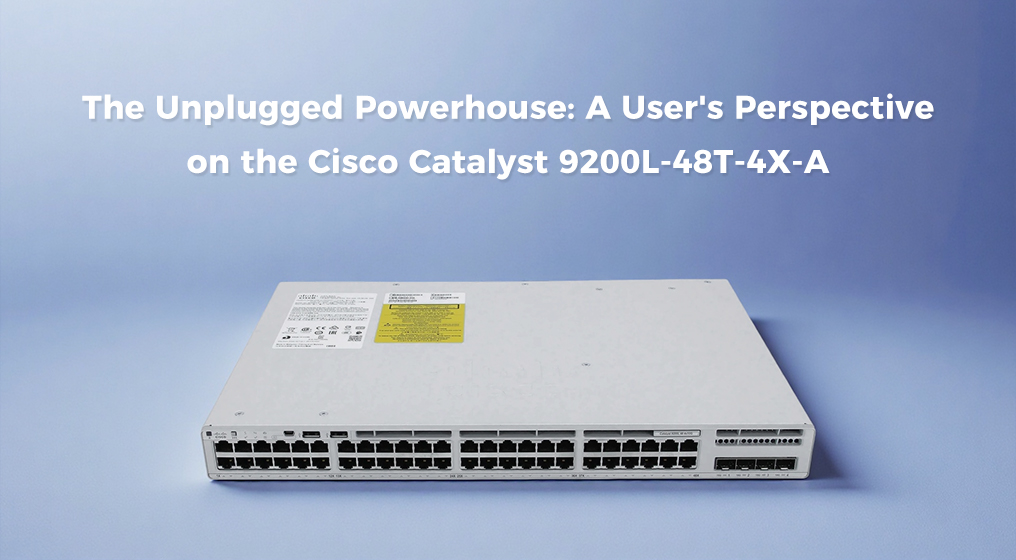
When you first slide this unit into the rack, the physical experience is distinctively "Cisco." It has a reassuring heft to it, weighing in around 4.53kg, and fits the standard 1RU form factor with a depth of roughly 445mm. The front panel is a dense forest of connectivity. On the left and center, you have the 48 RJ45 ports, tightly packed. But the real story is on the far right: four SFP+ slots. In a world where 1 Gigabit uplinks are becoming a bottleneck for modern collaboration tools and large file transfers, having four fixed 10 Gigabit uplinks on an "L" (Lite) series switch feels like a massive upgrade. It changes the workflow from "hoping the uplink doesn't saturate" to "knowing the pipe is wide open."

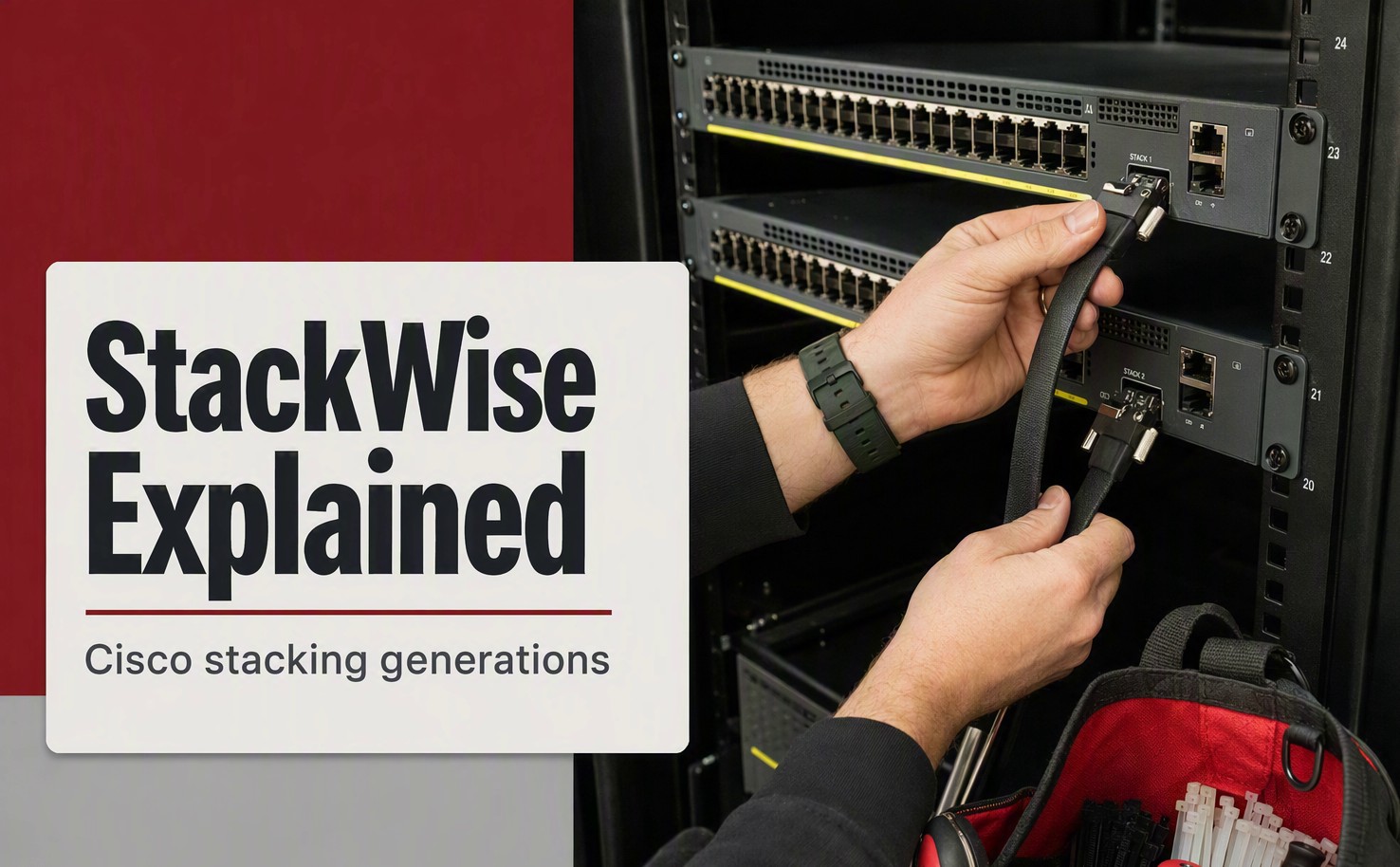
From a performance standpoint, this machine is surprisingly agile. The "T" in the model name stands for data-only, meaning these ports do not provide PoE power. While that might sound like a limitation, it is actually a feature for specific use cases—like connecting to a patch panel of user PCs or non-PoE servers. Because it doesn't have to manage complex power budgets, the switch focuses entirely on packet forwarding. With a switching capacity of 176 Gbps and a forwarding rate of roughly 77.38 Mpps, it handles line-rate traffic effortlessly. The 80 Gbps backplane (StackWise-80) allows you to stack units together, simplifying your topology so you can manage eight switches as one logical entity.
| Feature |
Specification |
| Model |
C9200L-48T-4X-A |
| Downlinks |
48 x 10/100/1000 Mbps (Data Only) |
| Uplinks |
4 x 10 Gigabit SFP+ (Fixed) |
| Performance |
176 Gbps Switching Capacity |
| Throughput |
~77.38 Mpps |
| Stacking |
StackWise-80 |
| License |
Network Advantage |
Living with the
9200L-48T-4X-A is a lesson in efficiency. The "A" at the end of the model number indicates the "Network Advantage" license. For the user, this transforms the device from a simple Layer 2 bridge into a smart Layer 3 participant. You get full OSPF routing, advanced security features, and the ability to use Cisco DNA Center for automation. The user interface—whether you prefer the classic CLI or the modern web UI—is responsive and intuitive. It feels like a premium software experience running on reliable hardware. You can set up complex VLANs, QoS policies for voice traffic, and ACLs in minutes, rather than hours.
Integration into the ecosystem is seamless. If you are already running a Cisco shop, this switch slots in perfectly. It speaks the same language as your core Catalyst 9500s or 9600s, supporting TrustSec for scalable security and SD-Access for software-defined networking. It plays nice with Cisco ISE, allowing you to automate policies so that a device is secure the moment it is plugged in. It is designed to be a good citizen in a larger network, providing rich telemetry data that helps you troubleshoot issues before your users even notice them.
However, the user experience is not without its trade-offs. The most obvious one is the lack of PoE. If you buy this switch expecting to plug in a Wi-Fi 6 access point or a VoIP phone, you are going to have a bad time. You will need separate power injectors or a mid-span, which adds clutter and complexity. Additionally, the uplinks are fixed. Unlike the modular C9200 models, you cannot swap these 10G SFP+ ports for 25G or 40G modules later. You are locked into 10 Gigabit speeds, which is plenty for now, but limits future-proofing for extremely high-bandwidth environments.
When looking at the value proposition, the
C9200L-48T-4X-A is a masterclass in cost-reduction without sacrificing intelligence. By stripping away the PoE circuitry and the modular uplink slots, Cisco has created a device that is significantly more affordable than its siblings, yet it still runs the full, powerful IOS XE operating system. It offers the "Advantage" feature set—the highest tier of software capability—at a hardware price point that makes sense for pure data aggregation. It is the perfect choice for the IT manager who needs enterprise-grade reliability and 10G speed but doesn't need to power the devices connected to it.