The Catalyst 9200L-24T-4X-A: A Real-World Look at Cisco's Access Layer Workhorse
You know that specific type of network panic that sets in when you realize your core distribution switches are overkill for the edge, but your old access switches are choking on modern traffic? Or perhaps you are staring at a wiring closet that needs to support high-density Wi-Fi 6 access points, but the uplinks just aren't cutting it anymore? This is the exact bottleneck the Cisco Catalyst
9200L-24T-4X-A is engineered to solve. It sits in that crucial "sweet spot" of enterprise networking—not quite a core switch, but far more powerful than a standard unmanaged box. It is designed to be the bridge between your users and the network core, handling the heavy lifting of aggregation without breaking the bank or the IT budget.
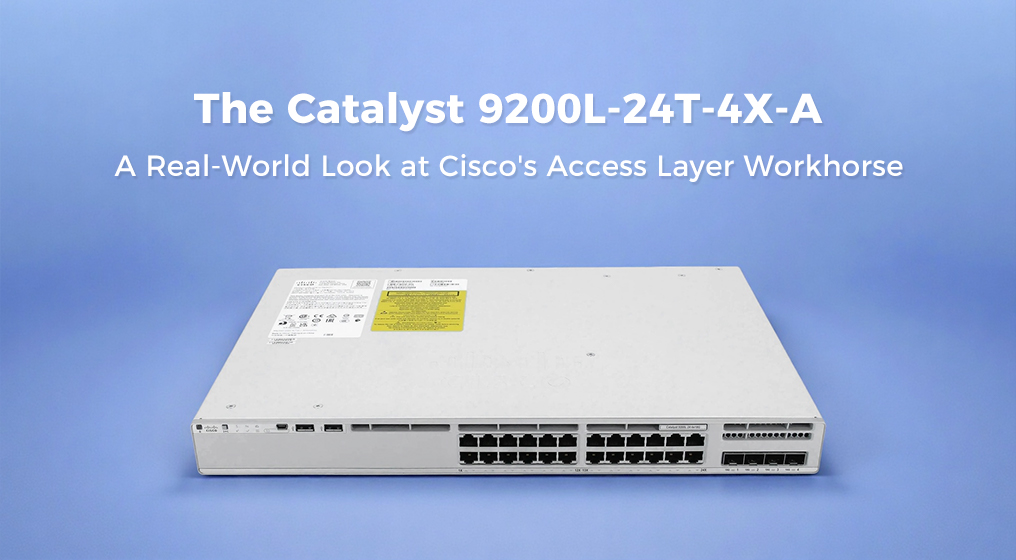
When you pull this unit out of the box, the first thing you notice is the build quality. It has that distinct, reassuring industrial weight that screams "enterprise hardware." It is a rack-mountable beast, measuring roughly 440×445×391mm and weighing in at roughly 5.44kg. It’s not trying to be a sleek consumer gadget; it is built to live in a rack for the next decade. The port layout is logical and dense, featuring a non-modular design that keeps things streamlined. It looks professional, functional, and ready for the data center floor.
Under the hood, this is a Layer 3 powerhouse. The "24T" in the name tells you it is packing 24 Gigabit Ethernet ports for your end devices—PCs, printers, and phones. But the real magic lies in the "4X." You get four fixed 10 Gigabit SFP+ uplinks. This is critical because, in a modern environment, 1 Gigabit uplinks are becoming a bottleneck. These 10G uplinks ensure that when twenty people try to download large files simultaneously, the link to your core doesn't saturate. With a switching capacity of 128 Gbps and a forwarding rate of roughly 95.23 Mpps, it moves traffic with impressive speed.
| Feature |
Specification |
| Model |
C9200L-24T-4X-A |
| Type |
Enterprise Access Switch |
| Downlinks |
24 x 10/100/1000 Mbps (Data Only) |
| Uplinks |
4 x 10 Gigabit SFP+ (Fixed) |
| Performance |
128 Gbps Switching Capacity |
| Throughput |
~95.23 Mpps |
| Stacking |
StackWise-80 (80 Gbps) |
| Power |
Non-PoE (125W AC) |
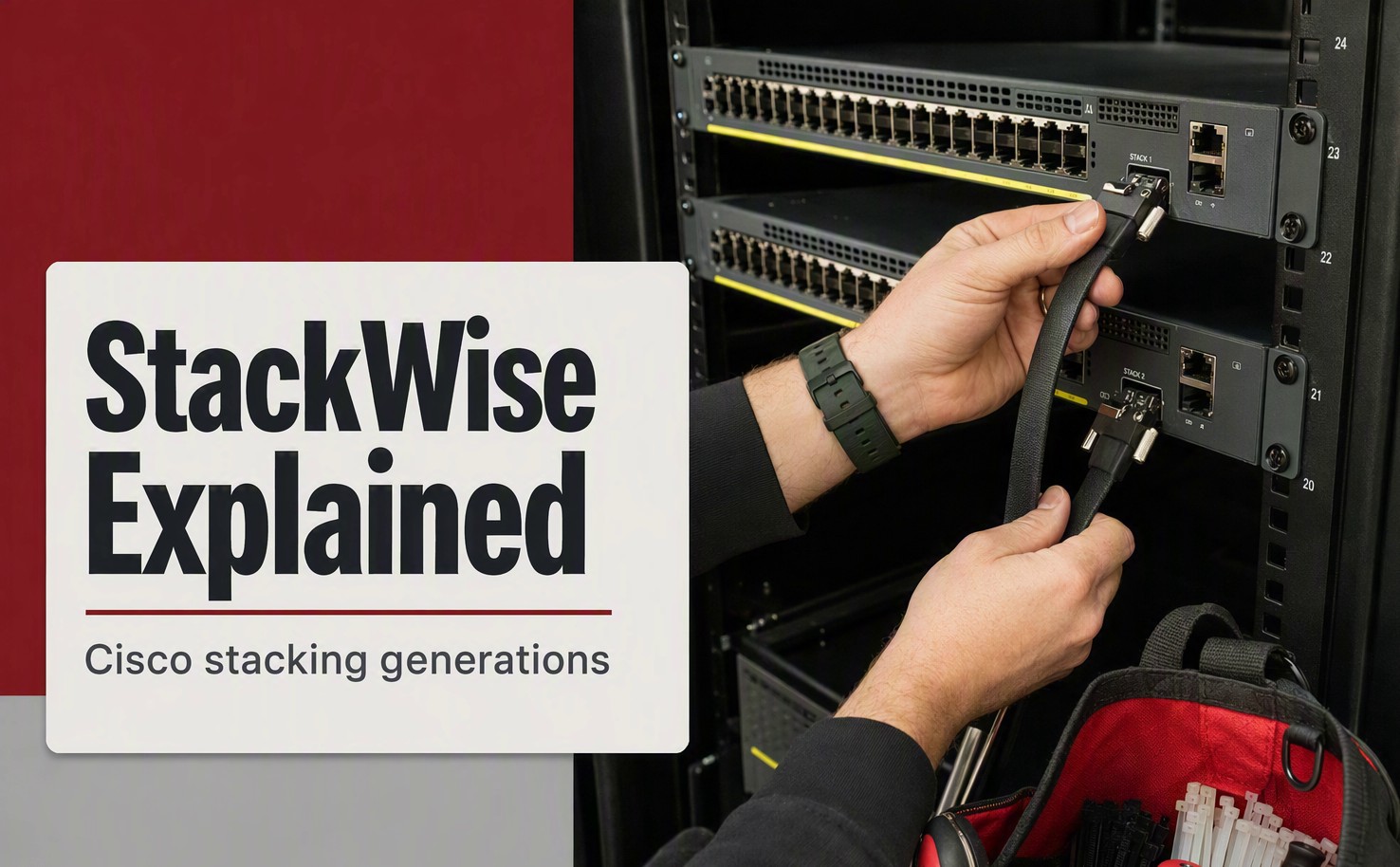
Functionally, the 9200L series is distinct because it runs the full Cisco IOS XE operating system. This isn't a stripped-down "Lite" OS; it supports advanced Layer 3 routing protocols like OSPF and EIGRP, meaning it can handle routing tasks right at the edge if needed. It also supports StackWise-80, allowing you to physically stack multiple units to act as a single logical switch with an 80 Gbps backplane. While it lacks the modular uplink slots of its bigger brother (the standard C9200), the fixed 10G uplinks on the "L" model offer a cost-effective, high-performance solution that is less prone to configuration errors.
In terms of user experience, the "A" at the end of the model number is a huge plus. It signifies the "Advantage" license level. This means you aren't just getting basic Layer 2 switching; you get the full suite of advanced security features, dynamic segmentation, and automation capabilities right out of the gate. Setting it up via the CLI feels snappy and responsive, and for those who prefer a GUI, the embedded web interface is surprisingly robust. It simplifies the complexity of enterprise networking, making VLAN management and QoS policies feel intuitive rather than arcane.
Integration into the Cisco ecosystem is seamless. This switch plays nice with Cisco DNA Center, allowing for software-defined access (SD-Access) automation. If you are already running a Cisco environment, this switch slots in perfectly, inheriting your existing security policies and management workflows. It supports TrustSec for scalable security and provides the telemetry data needed for modern network analytics. It is designed to be a good citizen in a larger network, speaking the same language as your core Catalyst 9500s or 9600s.
Let's talk about the elephant in the room: value. The
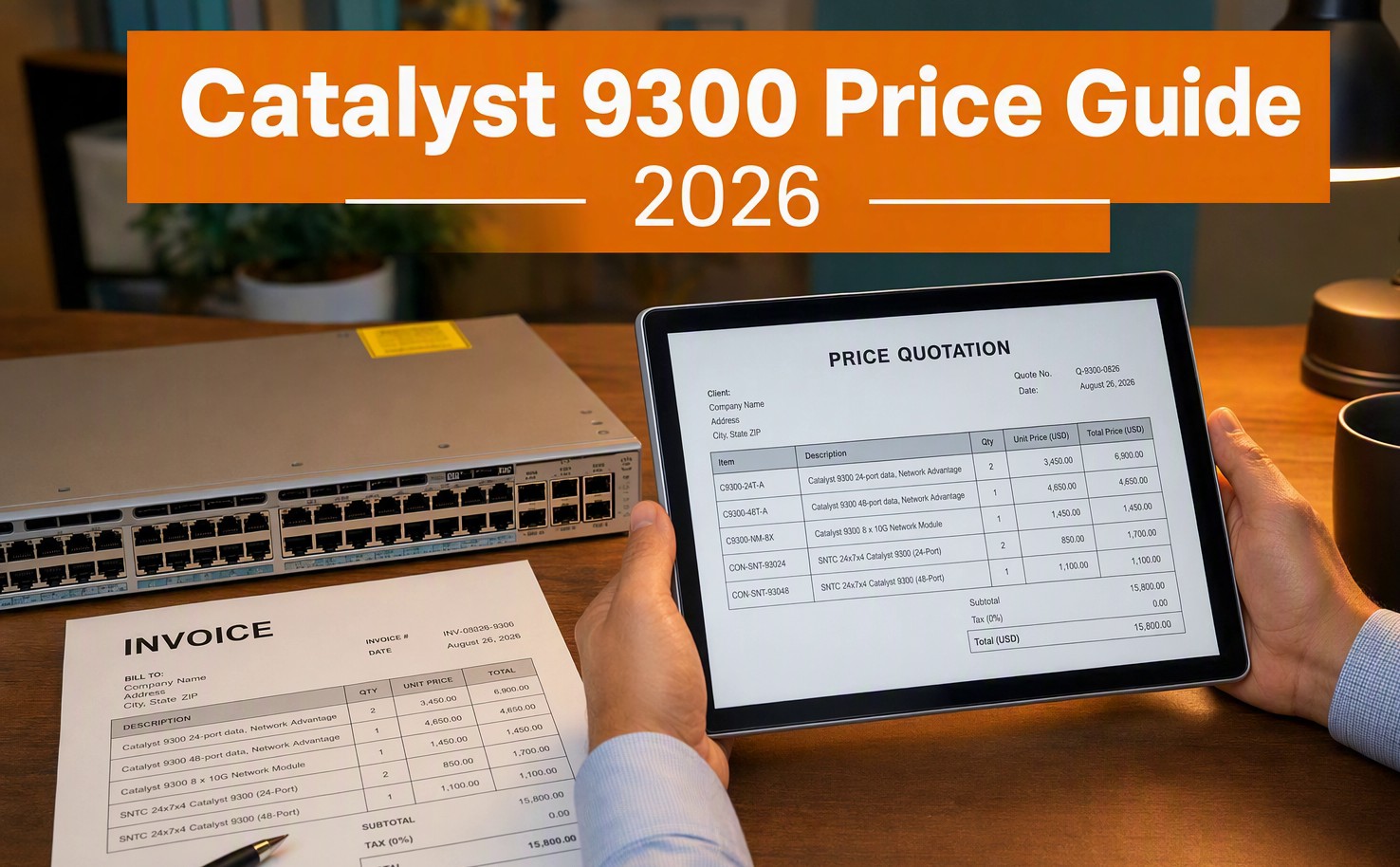
C9200L-24T-4X-A is generally considered a high-value entry in the Catalyst 9000 family. It is significantly more affordable than the modular C9200 models, largely because it foregoes the expensive modular uplink slots and PoE capabilities. If you do not need to power phones or cameras (since this is a data-only "T" model), you are saving a massive amount of money on the power supply and port licensing. It offers the premium IOS XE experience and 10G uplinks at a price point that makes sense for branch offices and dense access layers.
However, it is not without its trade-offs. The primary limitation is exactly what makes it cheaper: the fixed uplinks and lack of PoE. If you buy this expecting to plug in a Wi-Fi access point and have it power up, you will be disappointed; you will need separate power injectors or a PoE switch model. Additionally, because the uplinks are fixed, you cannot swap them out for 25G or 40G modules later—if your bandwidth needs explode beyond 10G, you are stuck. It is also a non-modular unit, so hardware flexibility is lower compared to the standard C9200.
Ultimately, the Catalyst
9200L-24T-4X-A is a specialized tool. It is perfect for a wiring closet where you have plenty of power outlets but need high-speed aggregation and rock-solid reliability. It balances the raw performance of 10 Gigabit uplinks with the manageability of IOS XE, creating a device that is easy to deploy, hard to break, and capable of handling the traffic demands of the next five years.