
Intellectual Property
Hot selling product recommendations
View More



















Cisco C9300-24T-A: The Unseen Backbone of Modern Enterprise Networks
Walking into a server room, the Cisco C9300-24T-A doesn’t demand attention—it commands respect. This isn’t just a switch; it’s the operational backbone for businesses where network reliability isn’t negotiable. With 24 Gigabit Ethernet ports and support for modular uplinks, it adapts to everything from campus-wide Wi-Fi deployments to IoT convergence without breaking a sweat. What really sets it apart is its balance of raw performance and thoughtful engineering, making it a go-to choice for enterprises that need more than just basic connectivity.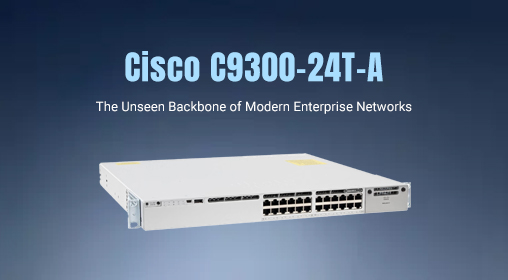
Let’s start with the numbers—the hard facts that define its capabilities:
|
Core Specification |
Details |
|---|---|
|
Port Configuration |
24 x 10/100/1000 RJ45 data ports |
|
Uplink Options |
Modular (supports 1G/10G/25G/40G via add-on modules) |
|
Switching Capacity |
208 Gbps |
|
Forwarding Rate |
154.76 Mpps |
|
Stacking Bandwidth |
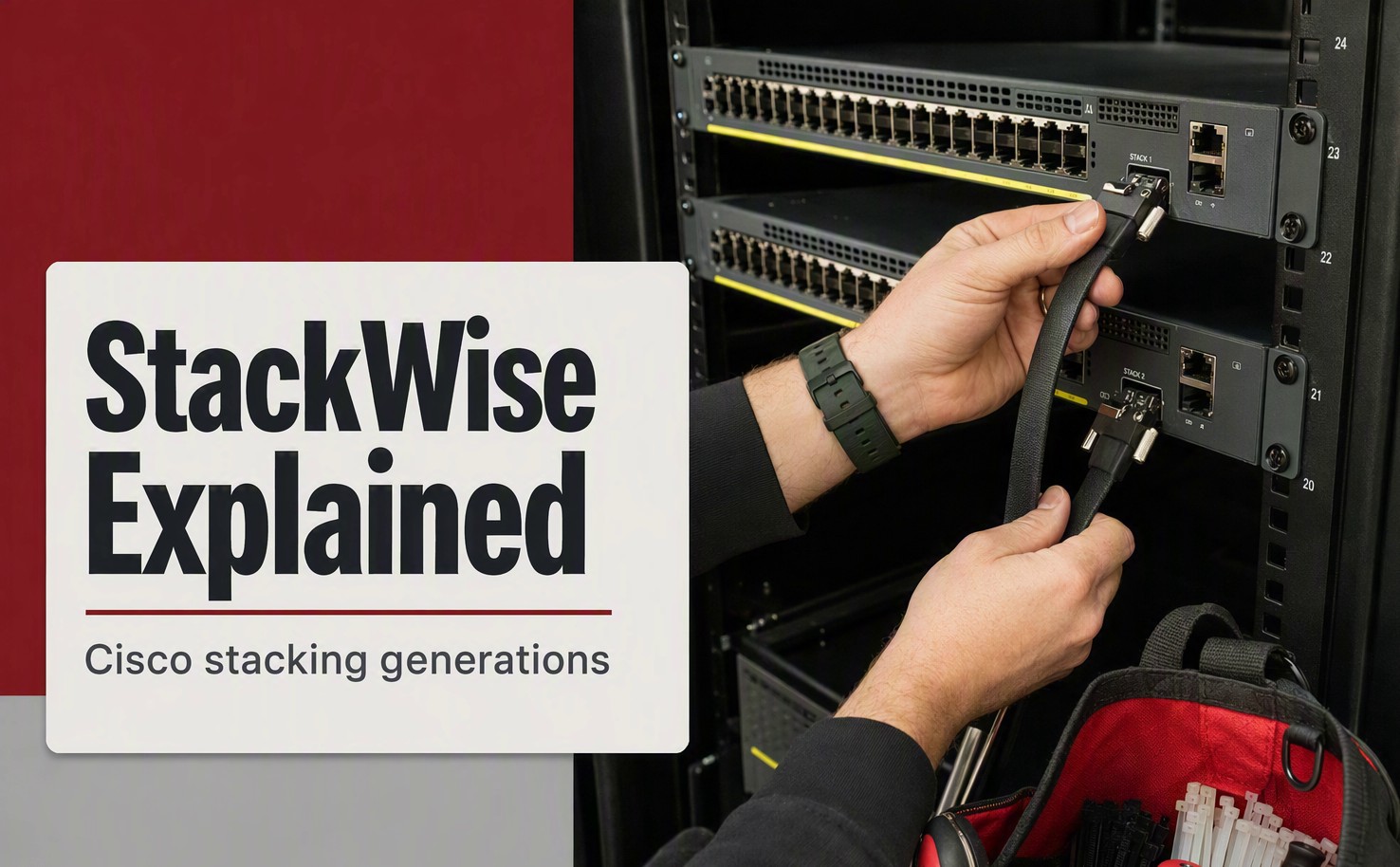
480 Gbps (StackWise-480) |
|
Power Supply |
350W AC (default) |
|
Memory |
8 GB DRAM, 16 GB Flash |
|
Dimensions |
1.73″ x 17.5″ x 17.5″ (4.4 cm x 44.5 cm x 44.5 cm) |
|
Weight |
7.27 kg (16.33 lbs) |
Built with a rugged metal chassis, the switch features a minimalist dark gray design that blends seamlessly into standard server racks. The intelligently placed status LEDs provide a quick health check, while the optimized airflow system keeps it running cool even under heavy loads. Weighing around 7.27 kg, it’s substantial enough to feel durable but compact enough for space-constrained environments.
Where the C9300-24T-A truly shines is in its feature set. Cisco’s StackWise-480 technology allows up to eight switches to operate as a single logical unit, simplifying management while ensuring high availability. The Network Advantage license unlocks advanced Layer 3 capabilities, including dynamic routing protocols like OSPF and BGP, while Cisco’s DNA Center integration enables policy-based automation and granular security through TrustSec and MACsec encryption. For IoT deployments, its smart port recognition automatically identifies connected devices—like IP cameras or access points—and applies predefined configurations, cutting setup time by nearly 30%.
Users often report a noticeable reduction in network complexity once deployed. One network engineer noted, "Stacking multiple units felt like managing a single device, and the DNA Center’s automation tools eliminated repetitive manual tasks". The learning curve for its advanced CLI can take time to master, but the payoff is substantial: automated policy enforcement, real-time traffic monitoring, and seamless integration with Cisco’s SD-Access architecture.
From a cost perspective, the C9300-24T-A sits in a strategic sweet spot. While its initial investment is higher than entry-level models, its total cost of ownership over five years often proves more economical. The scalable uplink design eliminates the need for hardware replacements as bandwidth needs grow, and its energy-efficient hardware can save thousands in electricity costs over its lifespan. For organizations planning IoT expansions or needing robust Layer 3 routing, it’s a future-proof investment that avoids costly upgrades down the line.
The Final Word
Strengths like unparalleled stacking flexibility, advanced security features, and seamless scalability make it ideal for demanding environments. However, its complexity might overwhelm smaller setups, and the mandatory DNA licensing adds to the initial cost. If your network requires robust performance, seamless scalability, and enterprise-grade security, the C9300-24T-A isn’t just a purchase—it’s a long-term strategic decision.