
Intellectual Property
Hot selling product recommendations
View More


















The C9200L-24T-4X-E: Cisco's Quiet Backbone for Modern Workplaces
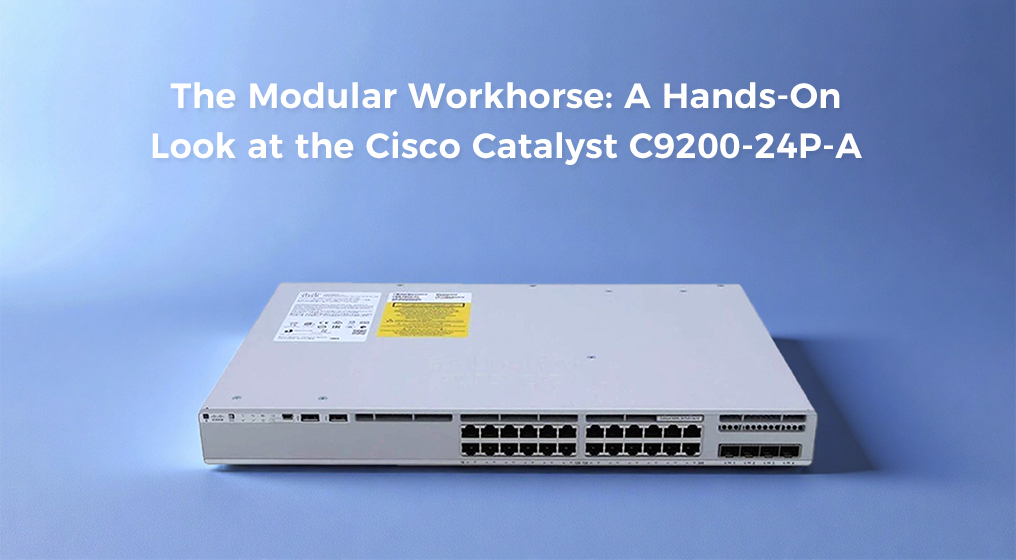
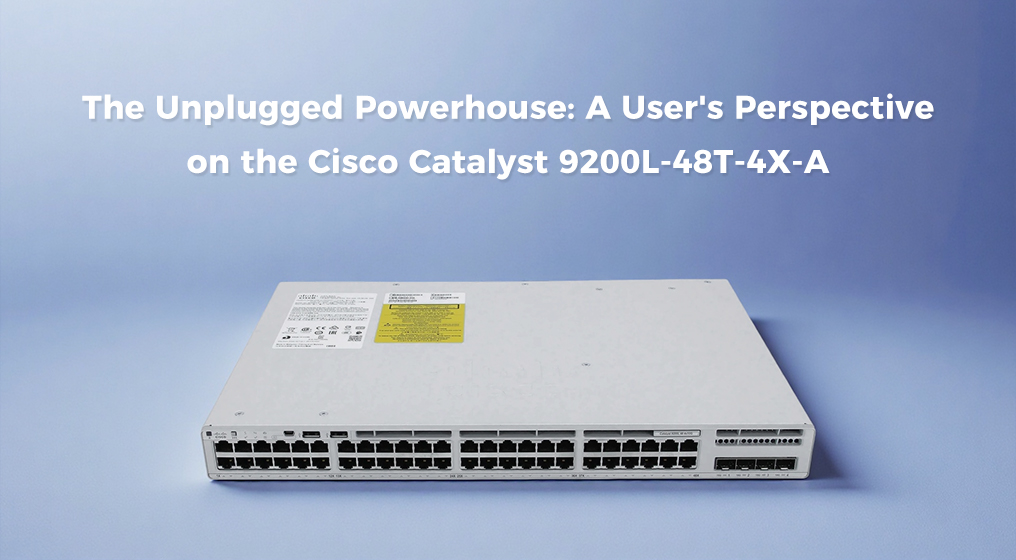
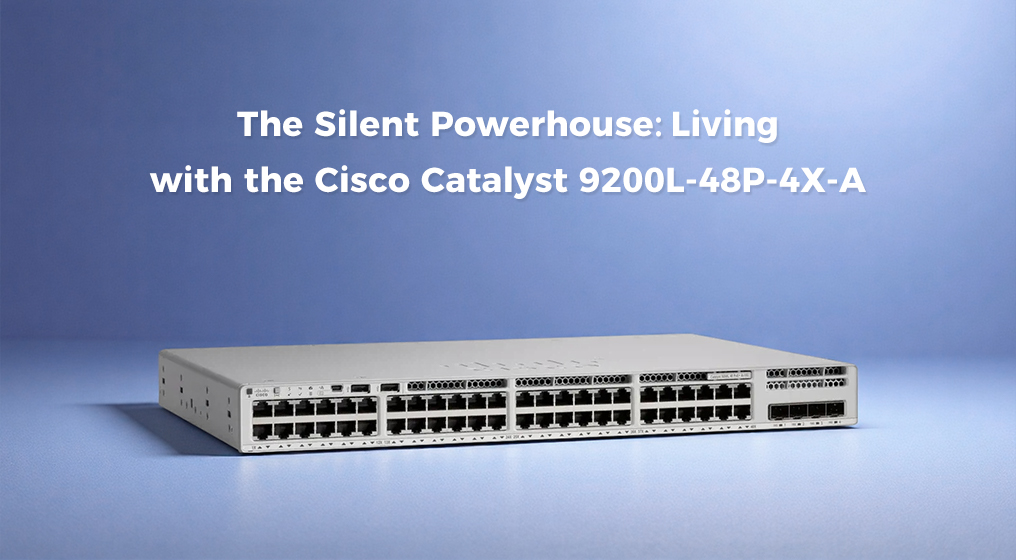
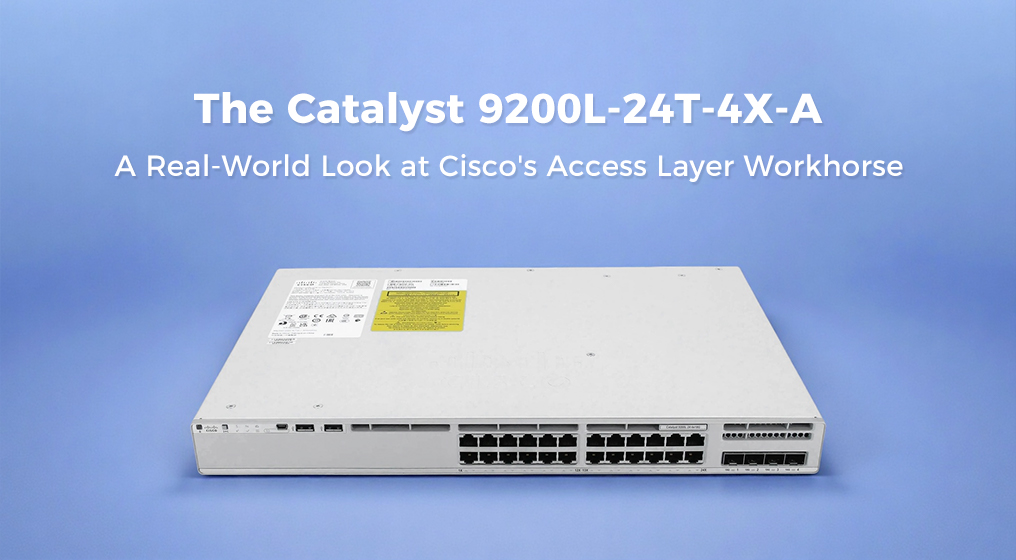
Walking into a server room and spotting the Cisco C9200L-24T-4X-E, you’d immediately notice its understated professionalism. This isn’t a flashy piece of hardware—it’s built for business. With dimensions of 440×445×329 mm and a weight around 4.35 kg, it slots neatly into standard racks without demanding extra space. The front panel is clean and intuitive: 24 Gigabit Ethernet ports lined up for access devices, complemented by four 10G SFP+ uplink slots for high-speed aggregation. The brushed metal finish and subtle branding give it a rugged yet refined look, while dual fan modules and redundant power supply slots hint at its reliability-focused design. It’s the kind of switch that doesn’t call attention to itself but quietly assures you it’s built to last.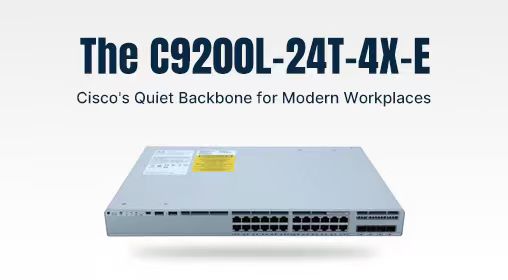
Where this switch truly shines is in its role as an access-layer workhorse for small to midsize businesses. Think offices with 50–150 users, where connecting computers, printers, IP phones, and wireless access points is a daily necessity. The 24 copper ports handle most edge devices without breaking a sweat, while the four 10G uplinks ensure there’s no bottleneck when linking to core switches or modern Wi-Fi 6 APs. One admin shared how deploying it for an e-commerce team eliminated file-transfer delays during peak sales—200 MB design files that once took a minute now sync in under 10 seconds. With an 80 Gbps backplane bandwidth and a forwarding rate of 95.23 Mpps, it’s engineered for environments where consistent performance matters more than raw throughput.
What users often appreciate is how Cisco’s DNA Center and IOS XE software simplify management. Zero-touch deployment means branch offices can unbox, power on, and auto-configure via centralized templates—no onsite IT needed. For less experienced teams, the graphical interface makes VLAN partitioning or QoS policies feel approachable. There’s also StackWise-160 support, allowing up to eight units to merge into a single logical switch, simplifying scalability. Security features like 802.1X port authentication and DHCP snooping prevent unauthorized access, something a retail chain leveraged to block rogue devices that previously slowed their network.
Of course, no device is perfect. The learning curve for Cisco’s CLI and DNA Center can steepen quickly for admins coming from other brands. And while the base model is competitively priced, fully leveraging features like DNA Advantage licensing or stacking modules adds cost. That said, most users argue the long-term savings in downtime avoidance and operational efficiency justify the investment. The switch’s mean time between failures (MTBF) of 525,990 hours underscores its reliability, reducing unexpected outages.
Here’s a snapshot of its core specs:
|
Parameter |
Specification |
|---|---|
|
Port Configuration |
24x 1G RJ45 + 4x 10G SFP+ uplinks
|
|
Switching Capacity |
80 Gbps
|
|
Forwarding Rate |
95.23 Mpps
|
|
Power Supply |
100-240V AC, 50/60 Hz
|
|
Stacking Technology |
StackWise-160 (up to 8 units)
|
|
Dimensions (H×W×D) |
440 × 445 × 329 mm
|
|
Operating Temperature |
0 to 45°C
|
When placed beside rivals like H3C’s S5560X, the C9200L holds its ground with stronger software integration and security automation, though some competitors may offer higher port density or lower upfront costs. For teams already invested in Cisco ecosystems, features like automated policy enforcement and seamless IoT device profiling streamline operations in ways that third-party gear struggles to match. It’s not the cheapest option, but for growing organizations prioritizing stability and security, it’s a calculated investment that pays off in reduced firefighting and future-proof flexibility.
In the end, the C9200L-24T-4X-E is like a dependable anchor—it just works, day in and day out. It might not be the most glamorous piece of tech, but for those who need a solid foundation for their network edge, it’s a choice that rarely disappoints.