
Intellectual Property
Hot selling product recommendations
View More



















Cisco Catalyst Showdown: Unpacking the C9200-48P-E and C9500-24Y4C-A for Your Network
Picking between Cisco's Catalyst switches feels like choosing a vehicle. The C9200-48P-E is that dependable work truck—rugged, practical, and perfect for daily grunt work. The C9500-24Y4C-A? More like a precision-engineered sports car built for speed and demanding environments. They’re both capable, but designed for entirely different missions. Let’s dive into what sets them apart.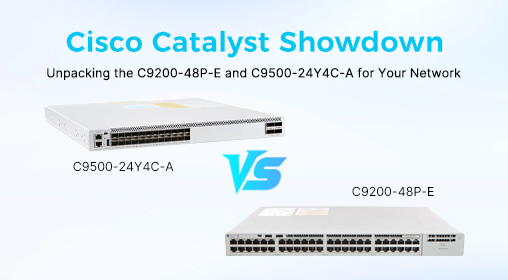
The Core Specs at a Glance
|
Feature |
C9200-48P-E |
C9500-24Y4C-A |
|---|---|---|
|
Port Configuration |
48 x Gigabit Ethernet PoE+ ports |
24 x Multi-Gigabit (1/10/25G) ports |
|
Uplinks |
4 x 1G SFP |
4 x 100G QSFP28 |
|
PoE Support |
Full PoE+ (30W per port) |
Not designed for PoE |
|
Switching Capacity |
176 Gbps |
Not explicitly stated (high-tier) |
|
Forwarding Rate |
361.9 Mpps |
Not explicitly stated (premium) |
|
Primary Use Case |
Access layer, IP phone/WAP connectivity |
Core/distribution, data-intensive workloads |
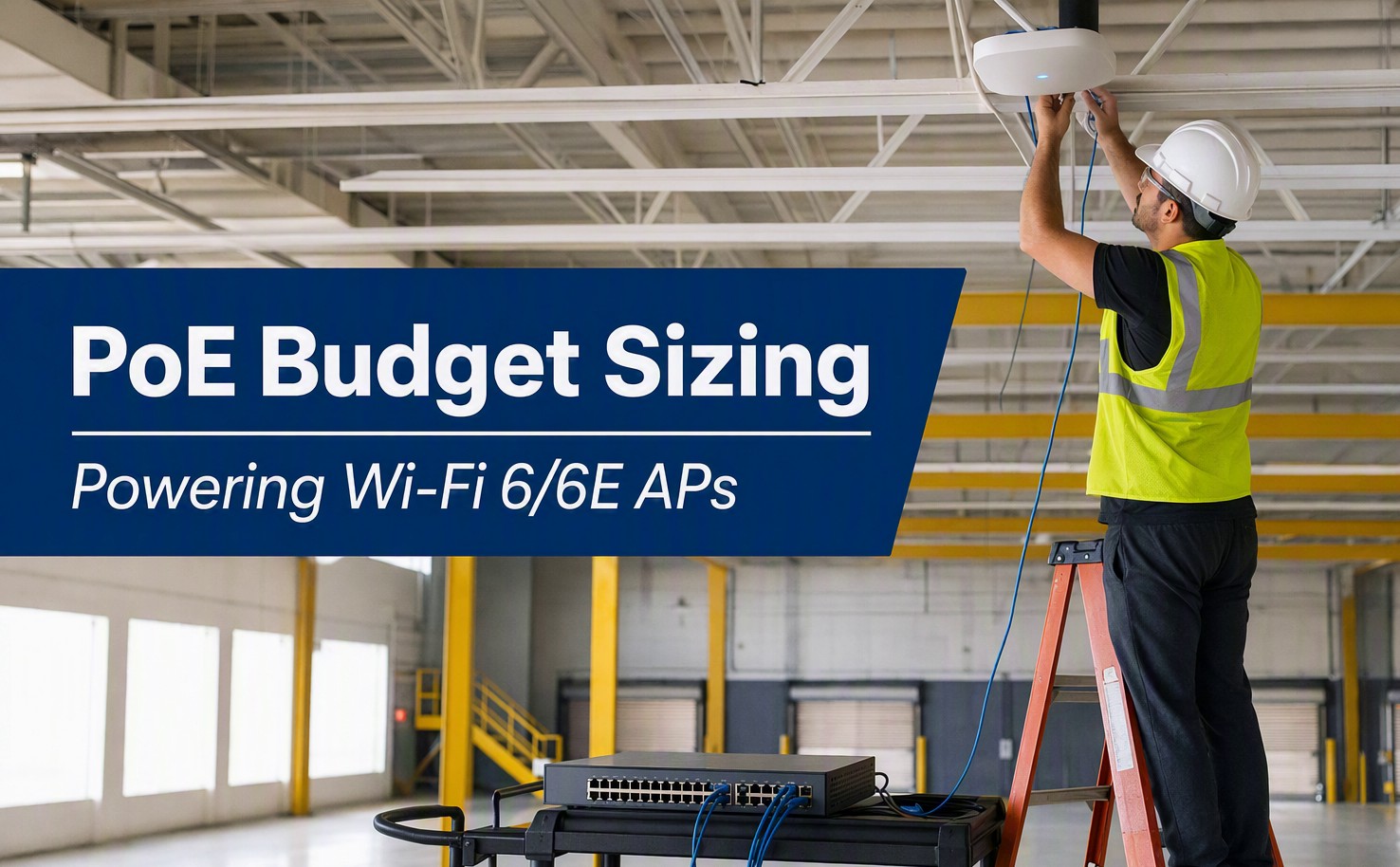
The numbers tell a clear story. The C9200-48P-E is all about connecting devices that need power and a network link—think IP phones, wireless access points, and cameras. Its 48 PoE+ ports deliver up to 30W each, making it a hub for edge devices . The C9500-24Y4C-A skips PoE entirely but offers serious speed: 24 ports that handle 1G, 10G, or 25G, plus four 100G uplinks for spine-leaf architecture . This isn’t an access layer switch; it’s built for aggregating traffic or serving as a core switch in a mid-sized network.
Design and Physical Presence
Physically, these switches send different signals. The C9200-48P-E sports a compact, metal chassis designed for wiring closets or cramped server rooms. It’s relatively lightweight and runs quiet enough for office environments . The focus is on practicality—getting it mounted, connected, and powered without fuss.
Cisco’s C9500 series feels more substantial, with a robust build meant for data center racks. It often includes redundant power supplies and fans, emphasizing cooling and reliability over silence. The aesthetic is all about business, with reinforced mounting and optimized airflow for sustained high loads .
Features and Capabilities
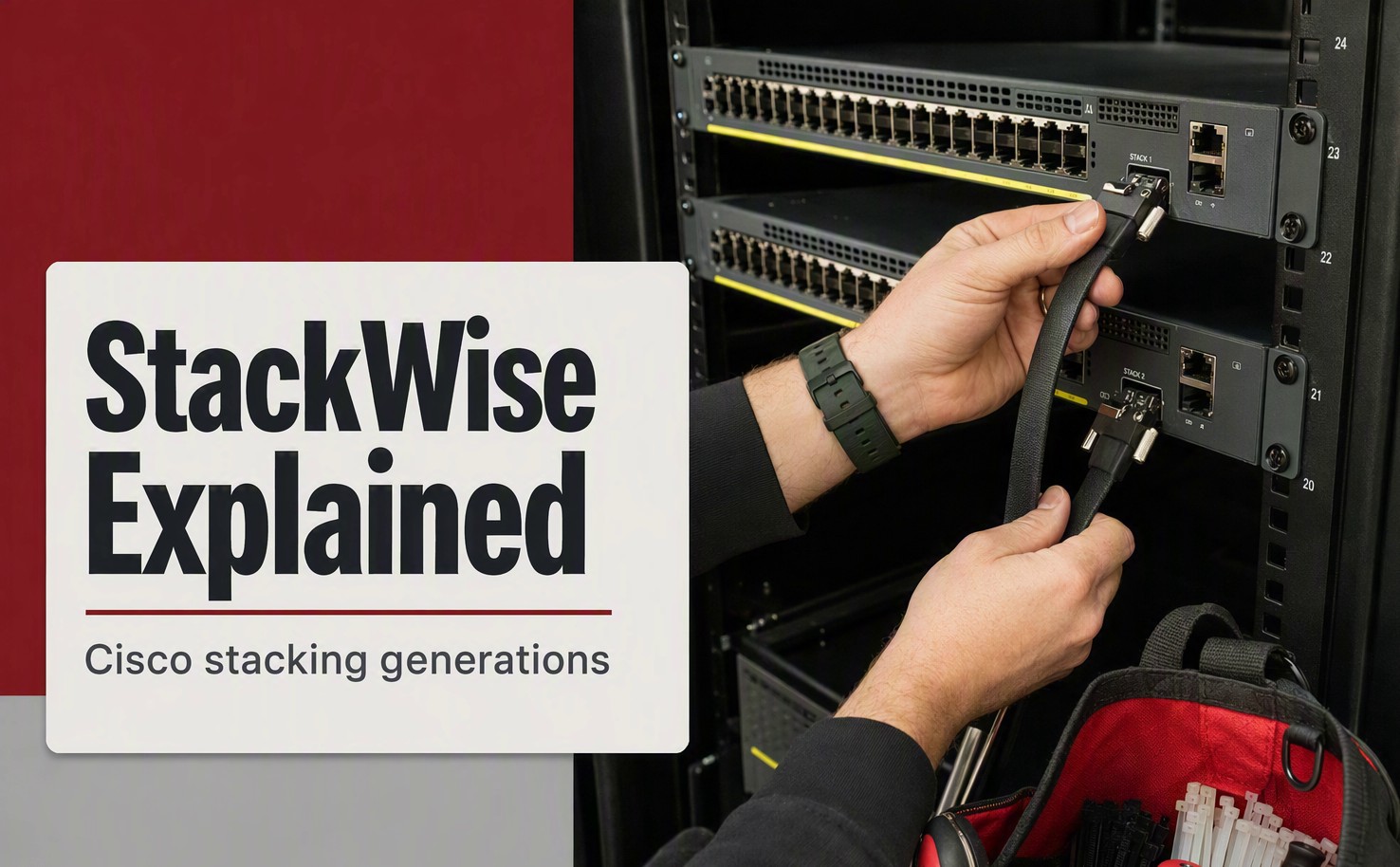
Both run Cisco’s IOS XE operating system, but their talents diverge sharply. The C9200-48P-E emphasizes ease of deployment and Power over Ethernet. It supports StackWise virtualization, allowing multiple units to operate as a single logical switch, and offers enhanced limited lifetime warranty . Security features like MACsec provide encryption, and it's designed for SD-Access, helping automate network policies .
The C9500-24Y4C-A is a performance beast. Those multi-gigabit ports are ready for bandwidth-hungry applications, and the 100G uplinks are built for high-speed spine-leaf architectures . It’s tailored for environments where programmability and high-throughput are non-negotiable. Think large enterprises or data centers where traffic flows are heavy and constant.
User Experience and Stability
For day-to-day use, the C9200-48P-E is straightforward. Setup is relatively simple, especially for standardized access layer deployments. It’s stable and handles PoE workloads reliably. The stackability is a big plus for scalability—you can start with one and add more as needed . The noise level is manageable for office settings.
The C9500-24Y4C-A demands a more skilled hand. Configuring multi-gigabit ports and 100G uplinks isn’t for beginners. But once set up, it delivers rock-solid stability for critical network cores. The hardware is built for always-on operation, with redundancy options that minimize downtime. This is a switch you install and trust with your most important data flows.
The Value Proposition
The C9200-48P-E delivers tremendous value for PoE-dependent environments. If you need to power a large number of devices and provide gigabit access, it’s an efficient, cost-effective solution. You’re paying for practicality and PoE capacity.
The C9500-24Y4C-A’s value lies in its speed and flexibility. The multi-gigabit ports and 100G uplinks are investments in future-proofing. It’s priced higher because it’s engineered for a different tier of performance—one that prioritizes massive data throughput over port count or PoE .
The Bottom Line
So, which one is right for you? It all comes down to the role you need to fill.
The C9200-48P-E is the clear choice for access layer duties where Power over Ethernet is critical. Its 48 PoE+ ports are ideal for connecting and powering devices like IP phones, wireless access points, and cameras. It offers straightforward management, reliable performance, and a form factor suitable for wiring closets. If your main task is device connectivity and power delivery, this switch delivers practical, focused value .
The C9500-24Y4C-A shines as a core or distribution layer switch for data-intensive environments. Its 24 multi-gigabit ports and four 100G uplinks are built for high-speed data transport, making it suitable for aggregating traffic or serving as the backbone of a medium-sized network. While it lacks PoE capability, it makes up for it with superior throughput and scalability for demanding applications .
Your network’ needs will determine the right fit—both are competent tools designed for specific tasks.