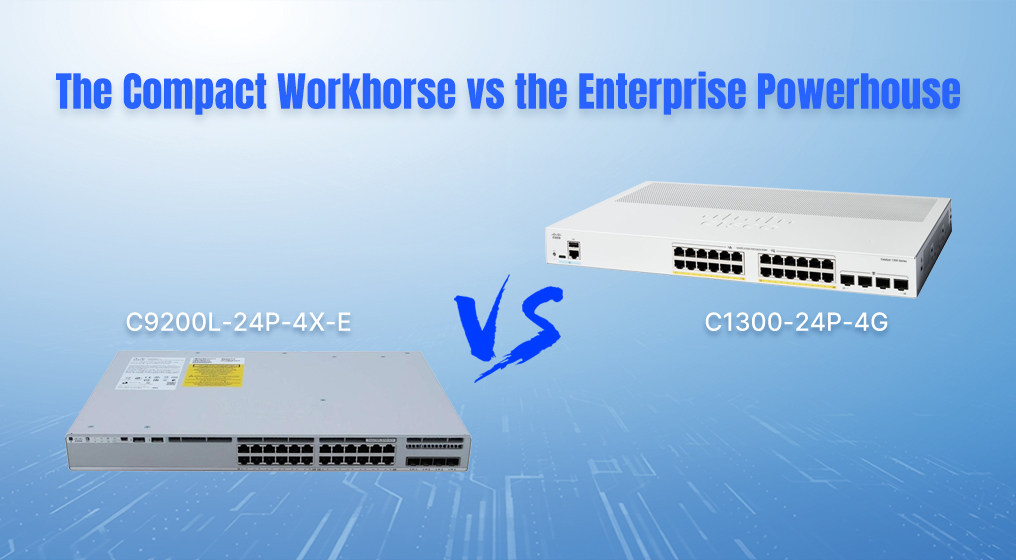
C1300-24P-4G vs C9200L-24P-4X-E: The Compact Workhorse vs the Enterprise Powerhouse
When choosing between the Cisco Catalyst C1300-24P-4G and C9200L-24P-4X-E, you’re essentially deciding between two network philosophies. The C1300-24P-4G is a no-frills workhorse designed for simplicity and cost-effectiveness in smaller environments. The C9200L-24P-4X-E, on the other hand, is a feature-packed powerhouse built for enterprise-scale demands, scalability, and advanced management. Let’s break down their key differences to help you make an informed choice.
Core Specifications Comparison Here’s a side-by-side look at their fundamental capabilities:
|
Feature
|
C1300-24P-4G
|
C9200L-24P-4X-E
|
|
Ports
|
24 x 1G Ethernet, 4 x SFP
|
24 x PoE+ Ethernet, 4 x SFP+
|
|
PoE Standard
|
None
|
PoE+ (802.3at)
|
|
PoE Budget
|
N/A
|
370W
|
|
Max Power per Port
|
N/A
|
30W
|
|
Switching Capacity
|
56 Gbps
|
80 Gbps
|
|
Forwarding Rate
|
41.7 Mpps
|
95.2 Mpps
|
|
MAC Addresses
|
16,000
|
32,000
|
|
Memory (DRAM/Flash)
|
1GB / 4GB
|
2GB / 64MB
|
|
Stackable
|
No
|
Yes (up to 8 units)
|
The C1300-24P-4G shines with its 24 fixed Gigabit Ethernet ports, ideal for basic connectivity in small offices or branch locations. The C9200L-24P-4X-E, however, brings PoE+ support with a robust 370W budget, enabling it to power demanding devices like IP phones, video conferencing systems, or high-density Wi-Fi 6 access points. Its higher switching capacity and forwarding rate make it well-suited for data-intensive environments with heavy traffic loads.
Design & Appearance Physically, these switches cater to different deployment scenarios:
●
C1300-24P-4G: Compact and fanless, this model excels in quiet environments like small offices or retail spaces. Its slim form factor is perfect for space-constrained closets or areas where noise is a concern. No frills, just reliable connectivity.
●
C9200L-24P-4X-E: Built for enterprise resilience, this switch features a more substantial chassis with options for redundancy (e.g., dual power supplies) and a comprehensive LED status array for monitoring PoE status, system health, and connectivity. Active cooling ensures stable operation even under heavy loads in server rooms or data centers.
Functionality & Features Their feature sets reflect their target markets:
●
C1300-24P-4G: Keep it simple. This switch excels at Layer 2/3 switching, VLAN segmentation, and basic Quality of Service (QoS) for traffic prioritization. Its “set it and forget it” approach makes it perfect for networks where advanced configuration isn’t needed. Great for basic segmentation and reliability.
●
C9200L-24P-4X-E: A feature-rich powerhouse:
○
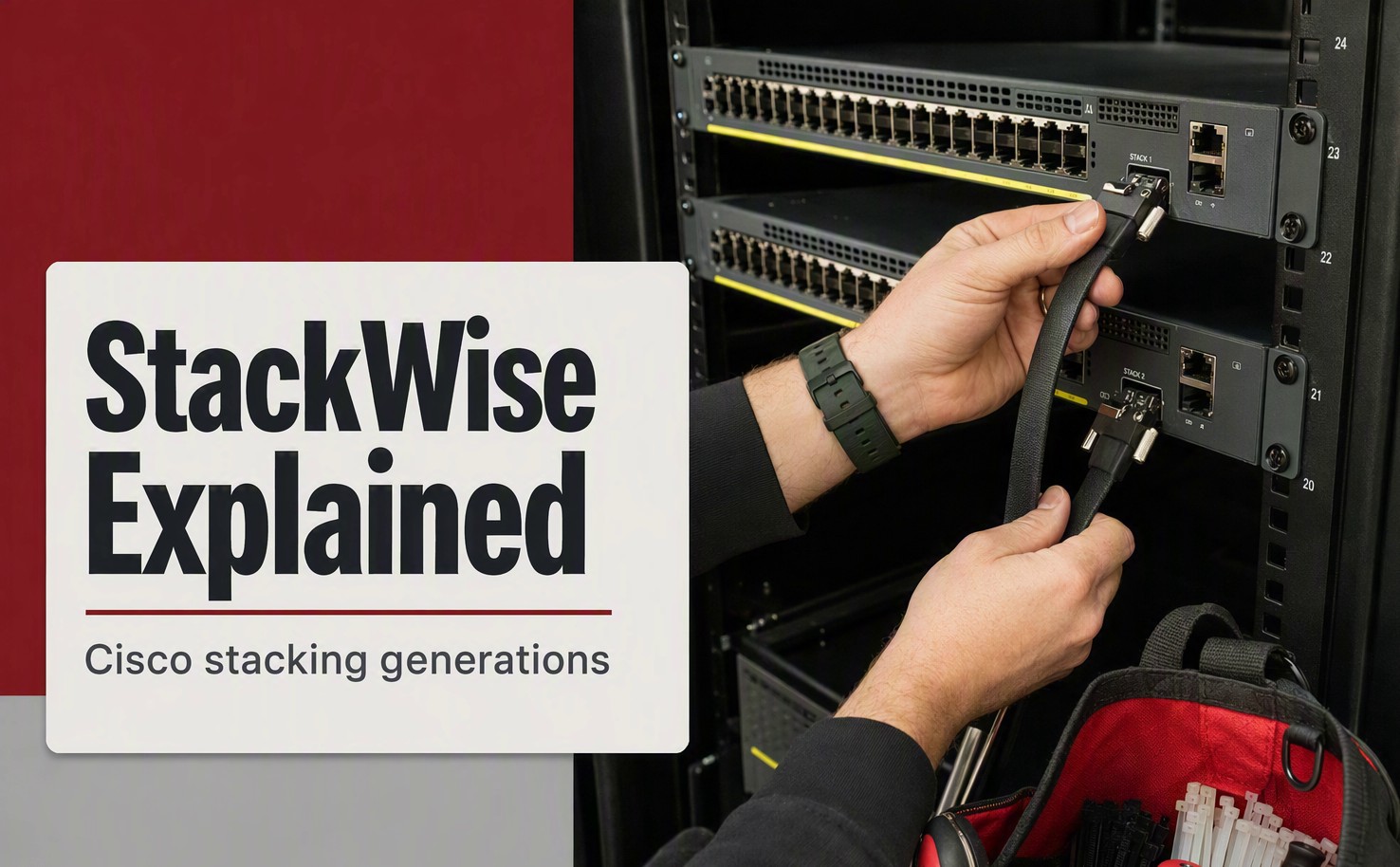
Stacking Capability: Seamlessly stack up to 8 units for a single logical switch, simplifying management and expanding capacity.
○
IoT-Ready: Built-in support for Cisco DNA Center simplifies management of IoT devices at scale.
○
Advanced Security: Includes MACsec encryption and Network-Based Application Recognition (NBAR) for deeper traffic visibility and protection.
○
Programmability: Leverage Cisco IOS XE’s Application Hosting Environment (AHX) for custom apps and automation.
○
Future-Proofing: Designed to adapt to evolving enterprise needs, from AI/ML workloads to IoT expansions.
User Experience Both prioritize usability but cater to different skill levels:
●
C1300-24P-4G: A breeze to deploy. Its intuitive web UI and CLI are approachable for novice admins. Minimal configuration requirements mean less time spent tweaking settings. Perfect for IT staff with limited network expertise.
●
C9200L-24P-4X-E: While more complex, its advanced features come with robust management tools. The CLI offers templates and automation options, and integration with DNA Center streamlines large deployments. Ideal for experienced admins or teams managing complex environments.
Stability & Reliability
●
C1300-24P-4G: Reliable for basic workloads. Its fanless design reduces points of failure in quieter environments. Suitable for applications where occasional downtime is tolerable (e.g., small office networks).
●
C9200L-24P-4X-E: Enterprise-grade resilience with redundant power supplies (optional) and active cooling. Higher MTBF ratings and advanced diagnostics tools minimize downtime in critical environments. Ideal for data centers or mission-critical deployments.
Cost Considerations (Without Prices)
●
C1300-24P-4G: Lower upfront cost makes it accessible for startups, small businesses, or remote offices. Total cost of ownership (TCO) is kept low by simplicity.
●
C9200L-24P-4X-E: Higher initial investment reflects its advanced features and scalability. Long-term savings may come from reduced management overhead, future-proofing, and PoE+ efficiency. Ideal for cost-justified enterprise environments.
Detailed Pros & Cons C1300-24P-4G: Pros:
●
Budget-friendly for small deployments.
●
Silent fanless operation.
●
Easy to set up and manage.
●
Reliable for basic connectivity needs.
Cons:
●
Limited scalability and no stacking.
●
Lacks advanced features for complex environments.
C9200L-24P-4X-E: Pros:
●
Enterprise-ready features (stacking, PoE+).
●
Future-proof with advanced security and programmability.
●
Redundancy options for high availability.
●
Ideal for IoT and data-intensive workloads.
Cons:
●
Complex to manage, requiring skilled staff.
●
Larger form factor and active cooling requirements.
The Bottom Line Choose the C1300-24P-4G if you need a simple, cost-effective switch for a small office, retail location, or branch office with basic connectivity requirements. Its ease of use and affordability make it a solid choice for non-critical environments.
Go with the C9200L-24P-4X-E when scalability, advanced features, PoE+ capabilities, and enterprise-grade resilience are essential. It’s future-proof for growing networks, supports IoT at scale, and excels in data centers or critical deployments where downtime is unacceptable.
By understanding your current needs and future growth plans, you can confidently select the switch that aligns with your infrastructure’s demands and resources.