
Intellectual Property
Hot selling product recommendations
View More


















The A10 TH6630: Industrial-Grade Computing for Demanding Environments
Picture a control room humming with activity, where a single computer needs to process high-resolution video feeds, manage complex machinery, and do it all without a hint of hesitation. That's the stage for the A10 TH6630, a piece of hardware built not for your living room, but for the heart of industrial operations. This isn't about flashy specs on a box; it's about unwavering reliability where it counts the most. It’s the kind of device that you install and then practically forget about, because it just works, day in and day out, handling tasks that would make consumer-grade machines stutter.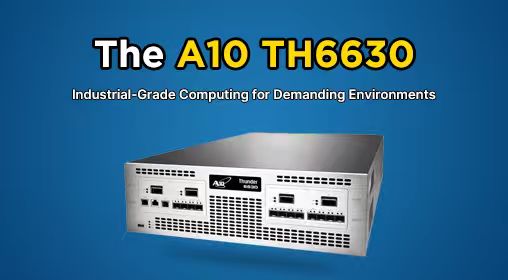
When you first get your hands on the A10 TH6630, its design language immediately communicates its purpose. The chassis is a testament to functional robustness, likely constructed from heavy-gauge steel or a durable aluminum alloy that can take a knock. The front panel is clean and uncluttered, featuring a set of well-spaced ports and indicators that provide a clear status check at a glance. Around the back, you'll find a comprehensive array of connectivity options, including multiple LAN ports for network redundancy, a selection of USB ports for peripherals, and various display outputs to drive several monitors simultaneously. The unit feels substantial, with a compact form factor designed for flexible installation, whether mounted on a rack, set on a desktop, or secured to a wall. Every vent and fan grill hints at a sophisticated active cooling system, ensuring the components inside stay cool under sustained heavy loads.
The true power of the A10 TH6630 is revealed when you look under the hood. It’s engineered to deliver consistent performance for specialized applications like machine vision systems and automated control. At its core is a modern multi-core processor, which provides the computational muscle needed for real-time data analysis. This is paired with generous, high-speed memory and fast storage options, ensuring that the system doesn't become a bottleneck when processing large volumes of information. The integrated graphics capabilities are more than sufficient for driving high-resolution displays, which is crucial for monitoring and interface applications.
Here’s a breakdown of its core technical components:
|
Feature Category |
Specification |
|---|---|
|
Processing |
Multi-core industrial-grade CPU
|
|
Memory |
Supports high-speed DDR4 memory, expandable to significant capacities
|
|
Storage |
Multiple SATA interfaces and M.2 slots for NVMe SSDs, allowing for fast boot times and ample data storage
|
|
Connectivity |
Abundant I/O including multiple Gigabit LAN ports, COM ports for legacy devices, and numerous USB 3.0/2.0 ports
|
|
Expansion |
Features like an M.2 slot for adding 5G connectivity and other specialized modules for future-proofing
|
|
Reliability |
Designed for 24/7 operation with wide temperature tolerance and resistance to shock and vibration
|
Functionally, this device is a Swiss Army knife for industrial computing. Its multiple LAN ports make it a natural fit for acting as a network gateway or a small-scale server. The serial COM ports are a nod to the reality of industrial floors, where a lot of legacy machinery still communicates via RS-232/485. Perhaps one of its most valuable traits is its support for various expansion modules. This means you can tailor the A10 TH6630 to a specific task, such as adding a powerful graphics card for vision processing or a dedicated networking card, without needing a completely new system. This flexibility is a cornerstone of its design, allowing it to adapt to roles ranging from a simple controller to the brain of a sophisticated robotic arm.
From a user's perspective, the value is in the peace of mind. System integrators appreciate that it comes from a stable, long-term supply chain, crucial for multi-year projects. The ability to remotely manage and troubleshoot the device saves countless hours and site visits. For the end-user, the experience is defined by silence—not auditory silence, but the silence of a machine that doesn't crash, freeze, or demand attention. It simply performs its duties reliably in the background.
Of course, no product is perfect. The A10 TH6630's primary strength—its industrial focus—can also be a hurdle. Its performance, while robust for its intended tasks, isn't geared towards high-end gaming or intensive graphic design work. Unlocking its full potential, especially for advanced applications, might require investing in specific software licenses or expansion cards, which adds to the total cost of ownership beyond the initial hardware price. However, when you evaluate its overall value proposition, the argument becomes compelling. This is a tool designed for longevity and minimal downtime. By consolidating functions into one robust, serviceable unit, it can potentially replace several less reliable devices. The modular, industrial-grade components are built to last for many years, protecting your investment from obsolescence and reducing the total cost of ownership over its lifespan. It’s an exercise in buying once and buying right.
In conclusion, the A10 TH6630 stands out not for having the single highest benchmark score, but for its masterful integration of adequate performance, exceptional connectivity, and rock-solid reliability into a ruggedized package. It’s engineered for businesses that view their operational technology as a critical asset, offering a dependable foundation that ensures industrial processes run with the efficiency and resilience required in today's demanding environments.