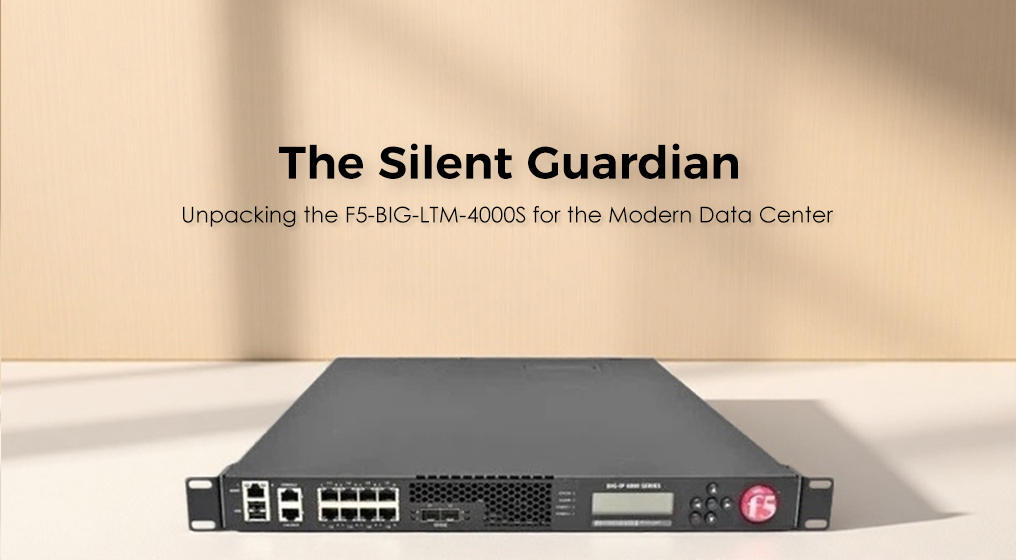
The Silent Guardian: Unpacking the F5-BIG-LTM-4000S for the Modern Data Center
It usually starts with a ticket. A user complains that the customer portal is timing out during peak hours, or perhaps a critical internal application is crawling at noon when everyone tries to log in. The network team scrambles, tracing packets and checking logs, only to find the bottleneck isn't the application code itself, but the sheer weight of unmanaged traffic hitting the servers. This is the precise moment where the
F5-BIG-LTM-4000S stops being just a piece of hardware and becomes a lifeline. It is designed to solve the chaotic reality of modern traffic flow, acting not just as a traffic cop, but as an intelligent gateway that ensures availability, security, and speed.
At its heart, this device is a Local Traffic Manager (LTM), a specialized appliance engineered to optimize the delivery of network resources. It sits between your users and your servers, making real-time decisions on where to send requests. It doesn't just blindly forward data; it understands the context of the connection. Whether it is ensuring a banking transaction completes without interruption or balancing the load across a farm of web servers during a flash sale, the 4000S is built to maintain continuity. It transforms a fragile infrastructure into a resilient mesh, capable of withstanding spikes in demand that would otherwise crash a standard setup.
When you look at the specifications, you begin to understand why it handles these heavy lifting tasks with such ease. This isn't a generic server; it is a purpose-built engine for network logic. The hardware is tuned for parallel processing, allowing it to inspect packets deeply without choking the CPU. It is designed to handle millions of concurrent connections, making it ideal for environments where "always-on" is not just a slogan but a requirement.
Core Performance Specifications
| Feature |
Specification |
| Processor Architecture |
1 x Quad-Core Intel Xeon (8 logical cores via hyper-threading) |
| Throughput Capacity |
10 Gbps (Layer 4 & 7) |
| Memory (RAM) |
16 GB |
| Storage |
500 GB Hard Disk Drive |
| Network Interfaces |
8 x 10/100/1000 Base-T RJ45 Ports |
| High-Speed Uplinks |
2 x 10 Gigabit SFP+ Slots (Optional/Configurable) |
| SSL Performance |
4,500 TPS (2K Key) / 8 Gbps Bulk Encryption |
| Compression |
4 Gbps (HTTP Compression) |
| Concurrent Connections |
10,000,000 |
| L4 Throughput |
1,250,000 Connections Per Second (CPS) |
| L7 Throughput |
425,000 Requests Per Second (RPS) |
Visually, the
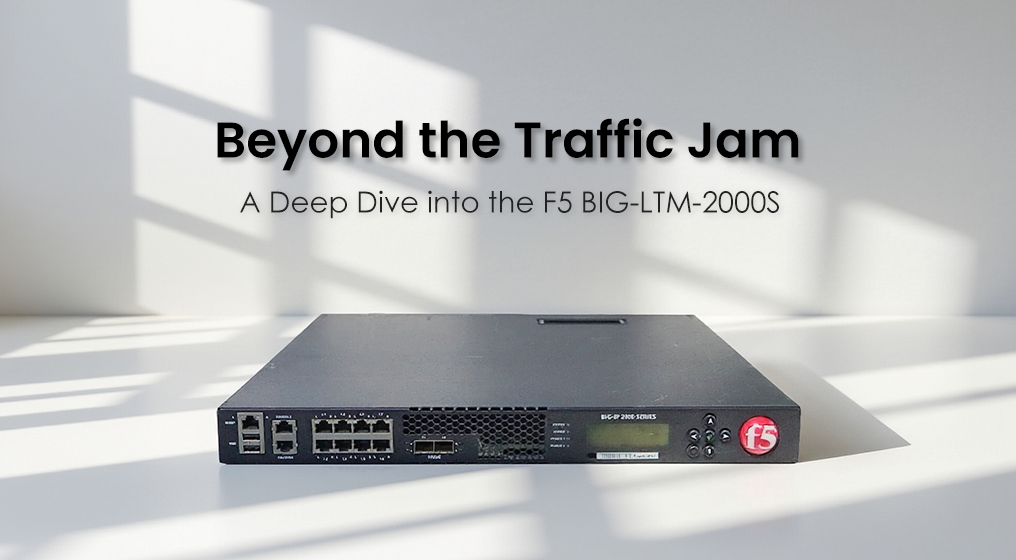
BIG-LTM-4000S is a study in industrial utilitarianism. It occupies a standard 1U rack space, designed to slide unobtrusively into a server cabinet. The chassis is built from robust metal, prioritizing heat dissipation and durability over aesthetics. On the front bezel, you will find a series of status LEDs that serve as the device's heartbeat—indicating power status, disk activity, and link speed. The rear panel is where the connectivity lives, populated by the bank of copper Ethernet ports and the fiber slots for high-speed uplinks. It feels substantial, built to survive the vibration and heat of a busy data center aisle.
Functionally, the device is a powerhouse of versatility. It excels at "Full Proxy" architecture, meaning it terminates the client connection and initiates a separate one to the server. This allows it to inspect and manipulate traffic in both directions. It can compress data on the fly to speed up mobile connections, offload heavy SSL encryption tasks to save backend server resources, and intelligently route traffic based on the content of the URL. It effectively decouples the client from the server infrastructure, allowing administrators to patch or upgrade servers without users ever noticing a blip in service.
From a user experience perspective, managing the 4000S is a tale of two interfaces. For the power user, the Command Line Interface (CLI) offers granular, surgical control over the system. For the visual administrator, the web-based GUI provides a comprehensive dashboard. You can visualize traffic flows, monitor server health in real-time, and configure complex load balancing algorithms with a few clicks. The learning curve can be steep—F5 logic is unique—but once mastered, it offers a level of visibility and control that is incredibly empowering. It turns the abstract concept of "network traffic" into something tangible and manageable.
In terms of value, the 4000S occupies a sweet spot in the market. It is not an entry-level box, nor is it a carrier-grade chassis costing a fortune. It offers enterprise-class performance at a mid-range footprint. For organizations that have outgrown software-only load balancers but aren't ready for the massive expense of the 10000 series, this is the logical evolution. The return on investment is often found in server consolidation; by offloading SSL and compression to the F5, you can run your backend application servers with fewer resources, effectively paying for the device through hardware savings on the server side.
However, no solution is without its trade-offs. The primary advantage is its sheer reliability and the depth of its feature set; it is virtually indestructible when configured correctly. The ecosystem is vast, with iRules allowing for infinite customization. On the downside, the licensing model can be complex and expensive. Furthermore, the proprietary nature of the OS (TMOS) means that you are locked into the F5 way of doing things, and finding engineers who are certified to manage these devices can be a challenge for smaller IT teams.
Integration-wise, the 4000S is designed to play nice with the modern hybrid cloud. It supports automation frameworks like Ansible and Terraform, meaning it can be provisioned alongside your cloud resources. It speaks the language of the data center, supporting standard routing protocols like BGP and OSPF, and integrates seamlessly with virtualization platforms like VMware. It acts as a bridge, allowing on-premise legacy apps to communicate securely with modern cloud-native microservices.
Finally, there is the matter of longevity. F5 supports its hardware for years, providing a stable software lifecycle. The BIG-IP software stack is updated regularly, patching vulnerabilities and introducing new features. Even as hardware evolves, the logic you build on the 4000S is portable, protecting your operational investment. It is a device that, once installed, often runs silently for years, solving those "timeout" tickets before the users even realize there was a problem.