The Invisible Backbone: A Deep Dive into the F5-BIG-LTM-3900-8G-R
In the high-stakes world of network infrastructure, silence is golden. The hum of servers and the blink of LEDs are the only sounds, yet behind that quiet facade lies a chaotic storm of data packets, encryption keys, and user requests fighting for attention. For many IT administrators, the
F5-BIG-LTM-3900-8G-R isn't just a piece of hardware; it is the peace of mind that comes from knowing that when a user clicks a button, the server responds. This device serves as the intelligent traffic controller of the data center, sitting between the unpredictable chaos of the public internet and the fragile order of backend applications. Its primary purpose is to ensure availability—making sure that a web application doesn't crash when traffic spikes, and that sensitive data remains encrypted without slowing down the user experience.
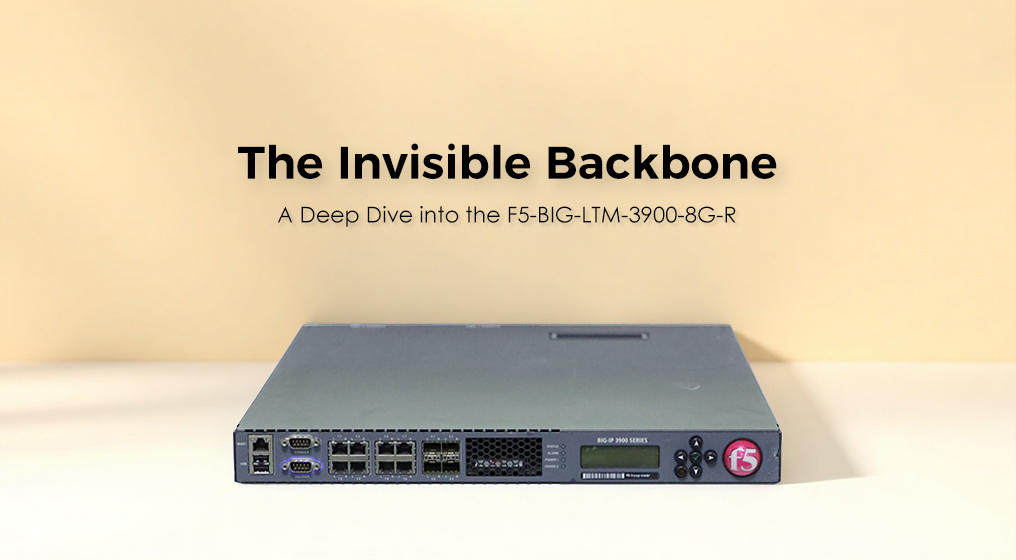
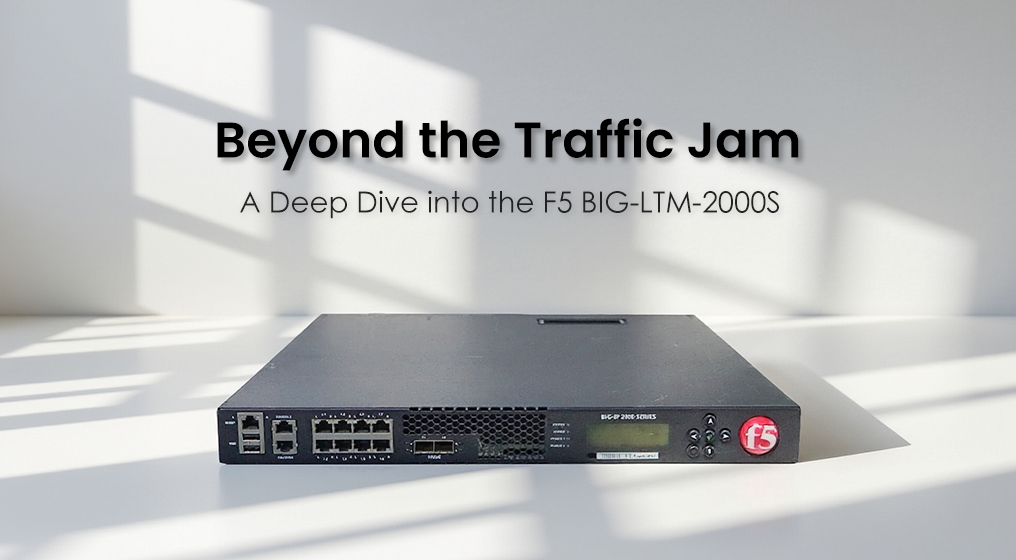
When you first rack the 3900 series, the physical experience is one of industrial solidity. It is a 1U chassis, designed to slide seamlessly into a standard server cabinet without demanding excessive space or power. The build quality feels substantial, prioritizing heat dissipation and durability over flashy aesthetics. On the front panel, a row of LEDs acts as the device's heartbeat, offering a quick visual diagnostic of system health and disk activity. The rear is where the connectivity lives, typically populated with a bank of Gigabit Ethernet ports and optional fiber uplinks, ready to be patched into the core network. It is built to be forgotten—installed once, configured perfectly, and then left to run silently for years.
The true power of this unit, however, lies in its internal architecture. It is not merely a pipe for data; it is a processor of logic. The "8G" in the model name signifies a generous memory allocation, which is critical for handling the massive connection tables required by modern, high-traffic applications. While older devices might choke on the overhead of SSL encryption, the 3900 is equipped with dedicated hardware acceleration to offload these heavy mathematical tasks from the main CPU. This means it can decrypt traffic, inspect it for threats, and re-encrypt it for the backend servers at wire speed, ensuring that security does not come at the cost of latency.
Core Performance Specifications
| Parameter |
Specification |
| Processor |
Single Quad-Core Processor (Optimized for Traffic Management) |
| Memory (RAM) |
8 GB (Standard Configuration) |
| Storage |
500 GB Hard Disk Drive |
| Throughput |
4 Gbps (Layer 4 & 7) |
| Network Interfaces |
8 x 1 Gigabit Ethernet (RJ45) |
| High-Speed Uplinks |
4 x 1 Gigabit SFP (Fiber) - Optional/Configurable |
| SSL Transactions |
500 TPS (Standard) / 15,000 TPS (Max with acceleration) |
| SSL Bulk |
2.4 Gbps |
| Compression |
Up to 3.8 Gbps (HTTP Compression) |
| Concurrent Connections |
4,000,000 (Layer 4) |
| Connections Per Second |
150,000 (CPS) |
From a user experience perspective, interacting with the BIG-IP software on this hardware is a journey of increasing complexity and reward. The interface offers a dual personality: a Graphical User Interface (GUI) for those who prefer visual topology maps and wizards, and a robust Command Line Interface (CLI) for scripters and automation engineers. For the uninitiated, the learning curve can feel steep; F5 uses its own logic, such as "Virtual Servers" and "Pools," which requires a shift in thinking. However, once an administrator understands the flow, the control is absolute. You can write "iRules"—small snippets of code that dictate exactly how traffic is handled based on the content of the packet itself. This allows for granular control, like redirecting mobile users to a lightweight version of a site or blocking specific user-agents in real-time.
In terms of value, the 3900 occupies a strategic middle ground. It is a step up from entry-level appliances, offering the horsepower needed for mid-sized enterprises or branch offices that require high availability. It consolidates functions that would otherwise require separate devices—load balancing, SSL offloading, web acceleration, and basic firewall capabilities. By offloading these tasks from the application servers, the F5 allows the backend infrastructure to run more efficiently, often justifying its own cost through server consolidation and reduced downtime.
However, a balanced view requires looking at the trade-offs. The strengths of the 3900 are its reliability and its deep feature set; it is a Swiss Army knife for network traffic. The dedicated hardware for SSL and compression ensures consistent performance even under load. On the flip side, the hardware is proprietary. You are buying into the F5 ecosystem, which means licensing costs can add up, and you are dependent on their support lifecycle. Furthermore, while 8GB of RAM and a quad-core processor are respectable, they can become a bottleneck for organizations expecting massive, sudden bursts of traffic that exceed the 4 Gbps throughput limit.
Integration into a modern ecosystem is surprisingly flexible. Despite being a hardware appliance, it speaks the language of the cloud. It supports automation tools like Ansible and Terraform, allowing it to be part of a CI/CD pipeline. It can act as an ingress point for Kubernetes clusters or bridge the gap between on-premise legacy apps and cloud-native microservices. F5’s software support is generally robust, with regular updates to the TMOS (Traffic Management Operating System) that patch vulnerabilities and introduce new features, extending the useful life of the hardware well beyond the typical refresh cycle of generic servers.
Ultimately, the
F5-BIG-LTM-3900-8G-R is about control. In a world where applications are becoming more distributed and traffic patterns more unpredictable, this device provides a stable anchor. It handles the heavy lifting of encryption and traffic shaping so that the applications can do what they do best: serve the user.