
F5 BIG-IP i5800: A Hands-On Review of the Enterprise Traffic Cop
When you are dealing with enterprise-level traffic, standard load balancers often start to sweat. Enter the
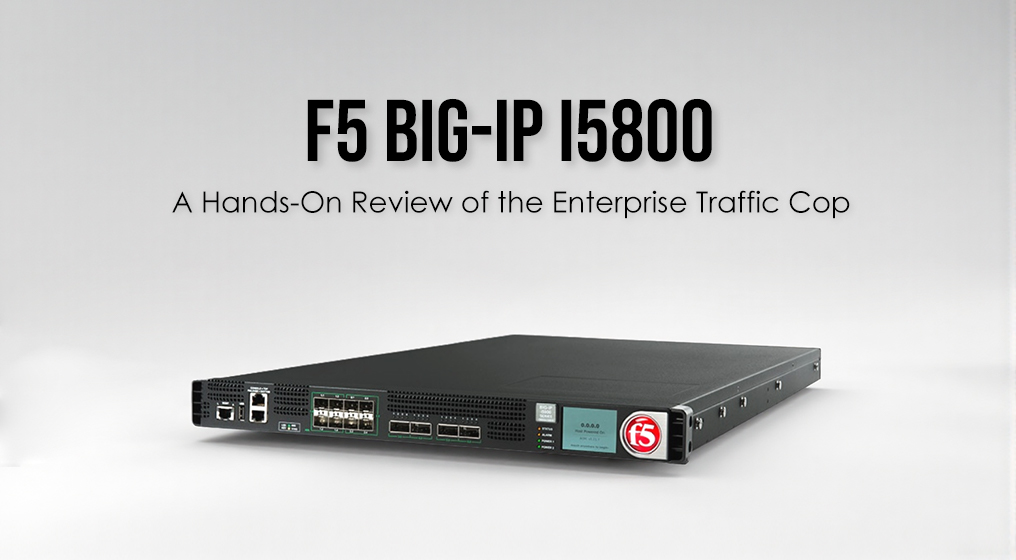
F5 BIG-IP i5800, a device that sits comfortably in the middle of the iSeries family. It is designed to be the traffic cop for your data center, managing the flow of information so your servers don't crash under pressure. From my experience, this isn't just a piece of hardware; it is a dedicated Application Delivery Controller (ADC) that handles everything from simple load balancing to complex security tasks. It essentially acts as a reverse proxy, sitting between your users and your backend servers to ensure everything runs smoothly.
The physical unit is a standard 1U rack-mount chassis, measuring about 1.72 inches in height and roughly 30.6 inches deep. It weighs in at around 26 pounds, so it has a reassuringly solid feel when you slide it into the rack. Inside, it is powered by a 4-core Intel Xeon processor (with 8 hyperthreaded logical cores) and comes equipped with 48GB of DDR4 memory. Storage is handled by a 480GB enterprise SSD. In terms of connectivity, it is quite flexible, offering options for Gigabit copper, SFP fiber, and high-speed 10Gb or 40Gb fiber ports, though some of these optical modules are sold separately.

What really matters, however, is how it performs when the heat is on. The i5800 is a beast when it comes to throughput. It can handle up to 60Gbps of Layer 4 throughput and 35Gbps at Layer 7. If you are running SSL encryption, which most of us are, it manages about 35,000 transactions per second with 2K RSA keys. It supports a massive 40 million concurrent connections, which is enough to keep a very busy e-commerce site or banking portal running without breaking a sweat.
| Core Specification |
Detail |
| Processor |
4-Core Intel Xeon (8 logical cores) |
| Memory |
48GB DDR4 |
| Throughput (L4/L7) |
60Gbps / 35Gbps |
| Max Concurrent Connections |
40 Million |
| SSL TPS (2K RSA) |
35,000 TPS |
| Virtualization |
Supports up to 8 vCMP Guests |
Using the device is a unique experience because of the TMOS architecture. It is not just a simple router; it offers full visibility into your traffic. You can write iRules, which are scripts that let you manipulate traffic in real-time—like changing HTTP headers or injecting cookies. It feels very powerful to have that level of control. The virtualization capability is also a standout feature; you can slice this single physical box into up to 8 virtual instances (vCMP guests), effectively running multiple isolated environments on one piece of hardware.
The ecosystem integration is generally smooth. It plays well with standard hypervisors and cloud environments, making it a good hybrid choice. However, you have to be aware of the lifecycle. F5 supports this hardware well, but moving from software version 11 to 12 or 13 can sometimes be a heavy lift, requiring careful planning.
Is it worth the investment? That depends on your budget and needs. This is a premium device with a premium price tag. If you are a small shop, the cost might be hard to justify compared to open-source software solutions. But for large enterprises, the reliability and the sheer power of the hardware acceleration make it a solid value.
Pros:
- Incredible throughput and connection handling.
- Deep traffic visibility with iRules scripting.
- Strong hardware-based SSL offloading.
Cons:
- High initial cost and licensing fees.
- The learning curve for TMOS can be steep for new admins.
- Upgrading the virtual instances isn't always as seamless as one would hope.