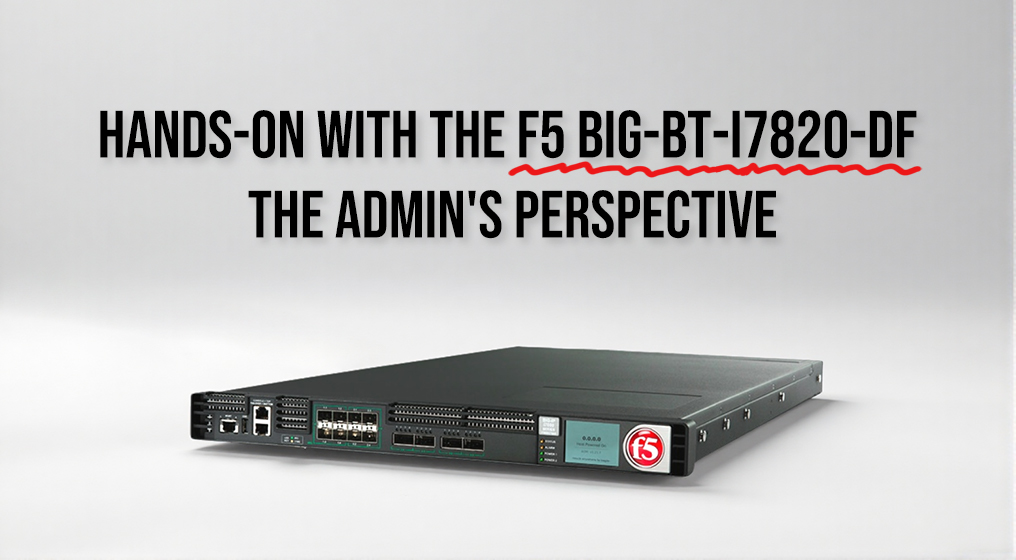

Hands-On with the F5 BIG-BT-I7820-DF: The Admin's Perspective
There is a specific, sinking feeling that hits a network engineer when they realize their load balancer has become the bottleneck. You have scaled your web servers and optimized your database, yet the user experience is sluggish. The culprit is often the device at the edge, choking on SSL handshakes. This is where the
F5 BIG-BT-I7820-DF becomes a lifeline. From the perspective of someone managing daily traffic chaos, this machine isn't just hardware; it is a safety net.
When you approach the I7820-DF in a data center, you notice its physical presence immediately. It is a 4U chassis, a substantial piece of engineering that demands space. It stands roughly 7 inches tall and extends deep into the rack. It feels heavy and rugged. The front panel is a dense array of SFP and SFP+ slots ready for fiber optics. The cooling system is equally imposing, with redundant fan trays that hum with steady airflow. It looks like a machine designed to handle the heavy lifting that smaller appliances cannot touch.

Managing this device is a journey through the F5 ecosystem. You are not just flipping switches; you are programming the network. The Traffic Management User Interface (TMUI) presents a vast hierarchy of objects. For a junior admin, it is overwhelming. For a seasoned engineer, the control is intoxicating. You can write custom iRules to manipulate traffic on the fly. The I7820-DF is designed for virtualization, allowing you to use vCMP to slice this single physical chassis into multiple isolated virtual instances. This means you can consolidate a rack full of devices into this single unit.
Under the hood, the specifications explain the machine's substance. It is powered by a Dual-core Intel Xeon processor (4 logical cores via hyperthreading) and backed by 16GB of DDR4 RAM, crucial for maintaining massive session tables. Storage is handled by a 500GB hard drive, providing space for extensive logging.
| Core Specification |
Detail |
| Processor |
Dual-core Intel Xeon (4 logical cores) |
| System Memory |
16GB DDR4 |
| Storage |
500GB HDD |
| Layer 4 Throughput |
20 Gbps |
| Layer 7 Throughput |
10 Gbps |
| L7 Requests/Sec |
650,000 |
| Max Concurrent Connections |
14 Million |
| SSL TPS (RSA 2K) |
4,300 |
The value proposition of the I7820-DF is unique. It offers the "Big Iron" chassis and virtualization capabilities of higher-end series but with mid-range internal specs. This makes it a fantastic entry point for organizations wanting to move toward consolidated infrastructure without paying for top-tier throughput they do not need yet. It is a long-term investment for future traffic spikes.
Integration is seamless if you respect the device's logic. It plays nicely with VMware and legacy infrastructure. However, there are friction points. The storage is a traditional spinning hard drive, which feels sluggish compared to modern SSDs. Additionally, the licensing model is complex; features like advanced DDoS protection often require separate keys.
Ultimately, the
F5 BIG-BT-I7820-DF earns its keep through reliability. It requires a skilled hand to steer, but when traffic hits, it stands firm. It absorbs the shocks of the internet and protects your backend. For the network engineer, that peace of mind is worth the weight of the chassis.