

Intellectual Property
Hot selling product recommendations
View More

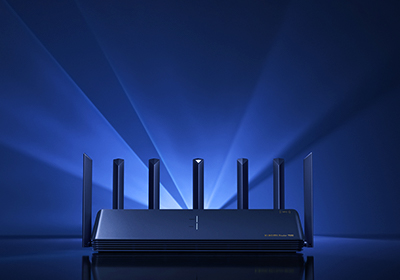


















The Cisco ISR 1100 Series is the entry point of Cisco's Integrated Services Router family —
the small-branch router that a shop, a clinic, a bank branch or a remote office deploys when it
needs real routing, real security features and real manageability in a fanless desktop box. It
is the class of device that terminates the WAN circuit, runs the branch firewall and VPN, and
hands the local network off to a switch.
The distinguishing feature of the ISR 1100 range is how many variations exist for what is
physically almost the same router. Cisco sells it in dual-Ethernet form, in LTE form, in WiFi
form, in combinations of all three, and — because LTE bands and WiFi channels are regulated
per country — in a different region code for each market. That is why this page lists ninety-odd
part numbers for a product family with only a handful of hardware platforms.
Reading the part number is therefore the essential skill for this range. Take
C1111-8PLTEEAWE and break it:
Two of these suffixes cannot be changed after delivery: the LTE region code and the
WiFi domain. A router ordered with the wrong region code will power up, but the modem
will not register on the local network, and the WiFi radio will not transmit on the channels
your market permits. Both mistakes are expensive, and both are entirely avoidable at the
ordering stage.
This is the fork that determines everything else, and it is a site decision rather than a
technical one:
A common and sensible design is to buy the LTE model and use it as the failover path behind
a fixed line, so the branch keeps working when the fibre is cut. Buying a dual-Ethernet model
and adding a USB modem later is the false economy here — it is not the same integration, and it
is not the same manageability.
LTE bands are allocated by national regulators, so a modem built for one market will not
operate in another:
Tell us the country of installation and the operator. Getting this wrong produces a router
that looks perfectly healthy and never connects.
The WiFi variants add an 802.11ac radio, which is genuinely useful in a small branch where
the router can also serve as the access point and there is no separate controller. But the
trailing domain letter is a regulatory constraint, not a preference — the radio is
hardware-identical across the letters and only the permitted channel set differs. Order the
domain that matches the country of use.
Note also that WiFi combinations exist in both the four-port and the eight-port platforms, and
combined with LTE in several variants. Where a branch needs cellular WAN and wireless
access from one box, that combination exists — but it narrows the region options, so confirm
availability for your market before specifying it.
The four-port and eight-port platforms differ in the local side of the router rather than the
WAN side: both present dual Gigabit WAN ports, and the eight-port models add local-access
switch ports. A branch with three or four devices can be served directly by the router; anything
larger should be planned with a separate access switch, in which case the four-port model plus
a switch is usually better value than buying ports you will not patch.
The platform number is not cosmetic. The C1112 range, for example, is built around
G.FAST local access with Gigabit SFP — an entirely different access technology from the
Ethernet platforms. If your site is fed by a technology other than conventional Ethernet or
LTE, confirm the platform supports it before comparing prices on port count alone.
Because the region and WiFi domain multiply the SKU count, we hold firm listed pricing for
the base models and the most commonly ordered LTE variants — the eighteen models priced in the
tables below — and quote the full regional and wireless matrix on request. Around
seventy-six further ISR 1100 part numbers are catalogued on this page without a standing
price; most are region-specific builds. Give us the country, the operator and the desired
feature set and we will return a firm price on the exact SKU rather than a nearest equivalent.
| Model | Platform | GE Ports | Integrated Radio | Price |
|---|---|---|---|---|
| C1121-4P | ISR 1121 | 4 | None | US$647.00 |
| C1111-4P | ISR 1111 | 4 | None | US$684.00 |
| C1101-4P | ISR 1101 | 4 | None | US$705.00 |
| C1111-8P | ISR 1111 | 8 | None | US$820.00 |
| C1111-8PWH | ISR 1111 | 8 | 802.11ac, domain H | US$864.00 |
| C1113-8P | ISR 1113 | 8 | None | US$908.00 |
| C1118-8P | ISR 1118 | 8 | None | US$980.00 |
These are the wired-WAN models. The spread from $647 to $980 across seven part numbers with
similar port counts reflects the platform generation and the local-access design — not a
difference in routing capability, which is broadly consistent across the range.
| Model | Platform | GE Ports | LTE Region | Price |
|---|---|---|---|---|
| C1121-4PLTEP | ISR 1121 | 4 | Pluggable LTE | US$766.00 |
| C1121-8PLTEP | ISR 1121 | 8 | Pluggable LTE | US$1,007.00 |
| C1121-8PLTEPWE | ISR 1121 | 8 | Pluggable LTE | US$1,115.00 |
| C1121-8PLTEPWQ | ISR 1121 | 8 | Pluggable LTE | US$1,160.00 |
| C1121-8PLTEPWZ | ISR 1121 | 8 | Pluggable LTE | US$1,160.00 |
| C1117-4PLTELAWZ | ISR 1117 | 4 | LATAM and APAC | US$1,275.00 |
| C1161-8PLTEP | ISR 1161 | 8 | Pluggable LTE | US$1,353.00 |
| C1127X-8PLTEP | ISR 1127X | 8 | Pluggable LTE | US$1,379.00 |
| C1161X-8PLTEP | ISR 1161X | 8 | Pluggable LTE | US$1,509.00 |
| C1111-8PLTEEA | ISR 1111 | 8 | EMEA and North America | US$1,557.00 |
| C1111-4PLTEEA | ISR 1111 | 4 | EMEA and North America | US$2,596.44 |
Note the two C1111 LTE lines at the bottom. The four-port C1111-4PLTEEA is priced
above the otherwise more capable eight-port C1111-8PLTEEA on this page. That inversion is a
reflection of live stock and sourcing on the older four-port LTE build rather than of the
hardware, and it is worth checking with us before ordering: if the eight-port model already
covers your port requirement, it is the better value of the two today.
The remaining seventy-six ISR 1100 part numbers catalogued on this page — covering the
C1109 carrier builds, the C1112 G.FAST platform, the C1113, C1116 and C1117 platforms, and the
full WiFi domain matrix across the C1111 and C1121 ranges — are quoted to order. They are held
as a catalogue so that the exact SKU you need can be identified and priced rather than
substituted.
To quote one of these, tell us:
With those four answers we will return a firm price on the exact part number. Buying the
nearest equivalent because it is listed on this page is how the region-code mistake is made —
and unlike a port count, it cannot be corrected later.
Taking C1111-8PLTEEAWE: C1111 is the platform, 8P is the number of
Gigabit Ethernet ports, LTE means an integrated LTE Advanced modem with SMS and GPS,
EA is the LTE region (EMEA and North America), W denotes an 802.11ac WiFi radio and
the final E is that radio's regulatory domain.
The one that matches the country of installation and, where relevant, the operator. EA
covers EMEA and North America, LA covers LATAM and APAC, and GB, US and
VZ are operator-specific builds. A router with the wrong region code powers up normally
and fails to register on the local network — it cannot be corrected by configuration, so this
must be right at the ordering stage.
The WiFi variants are separate part numbers with the radio fitted at build. Adding wireless
to a non-WiFi unit is not a field upgrade, so if wireless access from the router itself is
required, order a W SKU from the outset — and choose the domain letter for the country of use.
The local side. Both present dual Gigabit WAN ports, and the eight-port models add
local-access switch ports for devices patched directly into the router. If the branch has more
than a handful of wired devices, plan on a separate access switch and treat the four-port model
as sufficient.
It depends on the WAN at the site. A reliable fixed line calls for a dual-Ethernet model,
which is cheaper. Where the branch has no fixed line, or where it needs a cellular failover path
behind one, the LTE models provide the integrated modem and the manageability that an external
modem does not.
Because the range multiplies into regional and wireless variants whose availability and cost
move with sourcing. Rather than publish a misleading placeholder price, we quote those seventy-
six SKUs to order. Send the country, operator, port count and radio requirement and we will
price the exact part number.
Live stock and sourcing on that particular older four-port LTE build, not a difference in
capability that favours the four-port unit. Always compare the two against each other before
ordering — if the eight-port model meets your port requirement, it is the better value today.
The ISR 1100 is a desktop, fanless design with its power arrangement part of the unit. Confirm
the rack or shelf arrangement for the installation if the branch has an equipment cabinet, and
tell us if a specific mounting arrangement is required.


 Add to Cart
Added
Add to Cart
Added
 Add to Cart
Added
 Add to Cart
Added
 Add to Cart
Added
 Add to Cart
Added
 Add to Cart
Added
 Add to Cart
Added
 Add to Cart
Added
 Add to Cart
Added
 Add to Cart
Added